
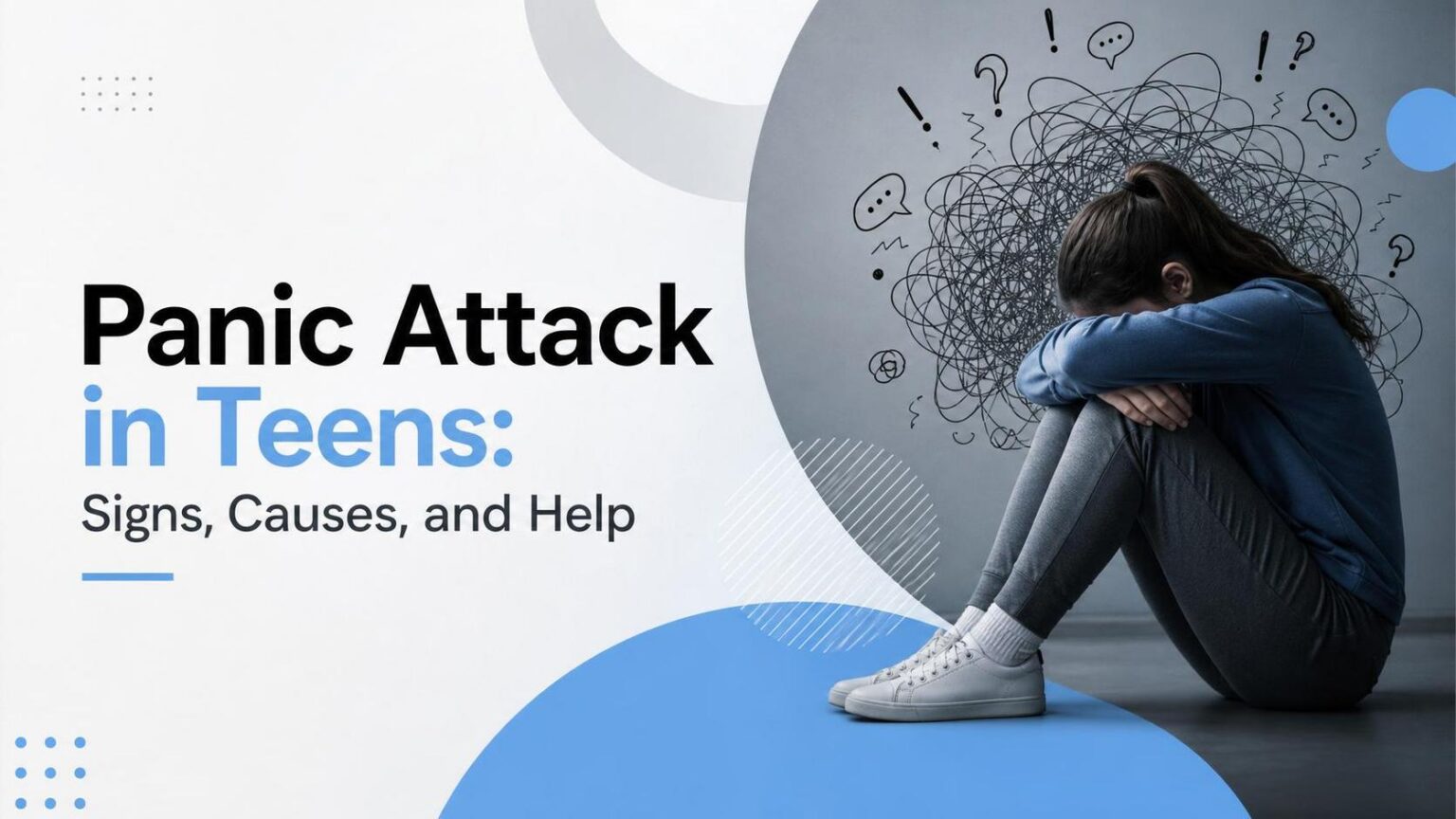

Panic Attack in Teens: Signs, Causes, and Help is a topic many families search for after a frightening moment: a child suddenly cannot catch their breath, has a racing heart, feels dizzy, and says they may be dying. For teens, that moment can feel confusing and embarrassing. For parents, it can feel terrifying.
The good news is that panic attacks in teens are more common than many people realize, and they are treatable. Research shows that 3–5% of teens experience panic attacks, with girls more frequently affected than boys. Still, every child deserves compassionate support, careful evaluation, and practical tools that help them feel safer in their body and in their teen’s life.
Panic Attack in Teens: What Is Happening?
A panic attack is a sudden wave of intense fear that activates the fight or flight response even when there is no actual threat. The brain misreads danger, the body releases stress hormones, and the child may feel as if something catastrophic is happening. Panic attacks can occur out of the blue or in response to a trigger such as school pressure, conflict, social stress, or a painful memory.
Panic attacks in teens can include disconnection from reality, shortness of breath, shaking, nausea, chest pain, dizziness, and an elevated heart rate. Some teens feel they are losing control, going crazy, or dying. These panic symptoms can arise quickly, peak within minutes, and leave emotional aftershocks that affect confidence, sleep, and daily functioning.
Signs of Panic Attacks in Teenagers
The signs of panic attacks vary from child to child, but the following symptoms are common. A teen may feel overwhelmed, trapped, or desperate to escape. They may ask to leave class, avoid a crowded event, or repeatedly seek reassurance that they are safe.
- Racing heart, pounding heartbeat, or palpitations
- Shortness of breath, choking sensations, or feeling unable to get enough air
- Chest pain, tightness, trembling, sweating, or chills
- Dizziness, nausea, tingling, numbness, or stomach distress
- Fear of losing control, fainting, dying, or being embarrassed
- Feeling detached from reality or from their own body
- Strong urge to flee, hide, or call someone for help
Common physical symptoms of panic attacks can mimic urgent medical problems. Chest pain and a racing heart may remind families of a heart attack, so it is reasonable to seek medical evaluation if symptoms are new, severe, or unusual. Once medical causes are ruled out, a mental health professional can help determine whether panic disorder or another concern is present.
Why Teens Are Vulnerable to Panic
Teenagers are uniquely vulnerable to panic attacks because adolescence combines rapid brain development, hormonal changes, social comparison, academic expectations, and identity formation. The teenage brain is still developing, especially the prefrontal cortex, which supports rational thinking, planning, and emotional regulation. That means many teens may react strongly before they can fully use logic to calm themselves.
Chronic sleep deprivation also matters. When adolescents do not get enough sleep, the brain has a harder time regulating emotions and becomes more sensitive to stress triggers. Add caffeine, social media, conflict, trauma, perfectionism, and peer acceptance worries, and the threshold for panic can drop.
Social situations can trigger panic attacks, especially class presentations, parties, performances, dating situations, or moments when a child fears embarrassment or rejection. Social media can amplify anxiety by encouraging constant comparison with curated images of other people’s lives. Persistent family conflict or high-pressure family expectations may also create a chronic stress response that makes panic attacks more likely.
Causes and Risk Factors
Panic attacks rarely have one simple cause. Instead, risk factors often stack together. A child may inherit a sensitive nervous system, experience a stressful event, struggle with social anxiety, or develop worried interpretations of normal physical sensations. Academic pressure, including perfect grades, sports, extracurricular activities, and college worries, can keep teens in a constant state of anxiety.
Trauma, bullying, major transitions, illness, grief, and substance use can also trigger panic attacks. Some teens experience expected panic attacks, meaning they happen in a feared situation, such as public speaking. Others have unexpected panic attacks that seem to come from nowhere, even while resting or trying to sleep.
Unexpected panic attacks can be especially frightening because the child may start to worry about the next attack. That fear of fear can become a cycle: the child notices a racing heart, interprets it as danger, feels more panic, and then avoids situations that seem connected to the episode.
When Panic Attacks Become Panic Disorder
Panic disorder is more than having a single panic attack. Panic disorder may be considered when a teen has repeated panic attacks and then spends significant time worrying about another attack or changing behavior to prevent one. A child with panic disorder may avoid school assemblies, buses, sports, restaurants, sleepovers, or other places where escape feels difficult.
Panic disorder can affect friendships, grades, family routines, and confidence. A teen may avoid situations not because they are being defiant, but because fear has convinced them that escape equals safety. Over time, avoidance can make panic disorder stronger. If a child begins to avoid normal activities, it is a sign that professional intervention may be helpful.
Panic disorder can also appear alongside anxiety disorders, obsessive compulsive disorder, depression, or mood disorders. This is why a thorough assessment matters. Treating panic disorder well means looking at the whole picture, not just the most dramatic attack.
What Does a Panic Attack Feel Like?
During a panic attack, teens may feel trapped inside a body that seems to be betraying them. They may say, “I can’t breathe,” “I’m dying,” “I need to leave,” or “Something is wrong with me.” They may feel embarrassed afterward, especially if the attack happened in front of classmates or friends.
The fight or flight response explains many symptoms. The brain signals danger, the body prepares to run or fight, breathing gets faster, muscles tighten, and attention narrows. Muscle tension, dizziness, and tingling can increase the belief that something terrible is happening. The goal is not to shame the child for reacting, but to help the child understand that panic is uncomfortable, not usually dangerous.
How Parents Can Respond in the Moment
Parents often want to fix panic attacks immediately, but calm presence is usually more helpful than rapid questioning. If your child is having an attack, speak slowly, use a steady voice, and validate what they feel. You might say, “This feels scary, and I am here. Your body is having a panic response. We can ride it out together.”
- Help your child move to a safe space if possible.
- Encourage slow breath patterns without forcing them.
- Use grounding: name objects, sounds, textures, and colors.
- Reduce stimulation such as crowds, noise, or bright lights.
- Avoid arguing about whether the fear is “real.”
- Afterward, ask what helped and what made it harder.
Support from parents during panic attacks should involve maintaining calmness, validating feelings, and using grounding techniques. After a panic attack, create a proactive plan for recovery so the child knows what to do next time and does not feel alone.
Coping Techniques Teens Can Practice
Coping skills work best when teens learn them before panic peaks. Deep breathing can be useful, but some adolescents need practice because focusing on breath can initially make them feel anxious. Breathing exercises such as the 4-7-8 method may help: inhale for 4 counts, hold for 7 counts, and exhale slowly for 8 counts.
The 5-4-3-2-1 grounding technique can also reduce panic symptoms. Identify five things you can see, four things you can touch, three things you can hear, two things you can smell, and one thing you can taste. This pulls attention away from anxious thoughts and back to the present moment.
Teens can also listen to music, watch a familiar show, hold ice, text a trusted person, or visualize a calming place. The aim is not to erase fear instantly, but to help the nervous system feel calm enough to regain control. Limiting caffeine and getting adequate sleep can improve emotional regulation and may reduce panic attacks over time.
Treatment Options for Panic Disorder
Treatment for panic disorder is not one-size-fits-all. A mental health professional may recommend therapy, family support, school accommodations, medication evaluation, or a combination. According to the National Institute of Mental Health, anxiety disorders are common and treatable, and early support can reduce impairment.
Cognitive behavioral therapy is often recommended as a primary treatment for panic disorder. In cognitive behavioral therapy, teens learn how panic works, how thoughts and sensations interact, and how to gradually face feared situations. This therapeutic approach helps teens learn that a panic attack feels awful but can pass without escape behaviors.
Research indicates that a combination of antidepressant medication and CBT can be highly effective for panic disorder, helping reduce the frequency and severity of panic attacks. A licensed prescriber may discuss antidepressant medications, including selective serotonin reuptake inhibitors, when appropriate. Families should ask questions, review benefits and risks, and avoid starting or stopping medication without professional guidance.
Acceptance and Commitment Therapy can also help treating panic by teaching teens to accept anxious feelings rather than fight them. Group therapy may help adolescents feel less alone. Treating anxiety disorders sometimes includes parent coaching, skills practice, and gradual exposure to feared places.
Treating Panic Without Reinforcing Fear
One tricky part of treating panic disorder is avoidance. When a child avoids a cafeteria because an attack happened there, relief comes quickly. But the brain may learn that the cafeteria was dangerous and avoidance kept them safe. Over time, this can reinforce fear and increase panic attacks.
That does not mean forcing a child into overwhelming situations. Treating panic works best when exposures are gradual, collaborative, and guided by a therapist. A teen might first imagine the cafeteria, then walk past it, then sit near the door, then eat with a trusted friend. Treating panic disorder is about building confidence step by step, not proving toughness.
The American Academy of Child and Adolescent Psychiatry encourages families to seek help when symptoms interfere with relationships, learning, or routines. Treating panic early can prevent the cycle from shrinking a teen’s world.
When to Seek Professional Help
Consider reaching out to a pediatrician or mental health professional if panic attacks happen repeatedly, interfere with school, cause avoidance, disrupt sleep, or lead to fear of leaving home. Also seek help if your child talks about dying, self-harm, hopelessness, substance use, or feeling unable to stay safe.
Because symptoms such as chest pain, fainting, or shortness of breath can have medical causes, new or severe episodes deserve medical attention. If immediate safety is a concern, use emergency services or crisis resources in your area. The CDC’s children’s mental health resources can help families learn more about youth mental health signs and support.
Many teens recover well with treatment, practice, and steady support. Panic disorder is not a character flaw. It is a treatable mental health condition that affects the body, brain, and behavior.
FAQ: Panic Attacks in Teens
Is it normal to have panic attacks as a teenager?
Yes, panic attacks in teens can happen, and many teens experience at least one intense episode during adolescence. However, “common” does not mean it should be ignored. If panic attacks repeat, cause avoidance, or disrupt a child’s life, it is wise to seek treatment.
What is the 3-3-3 rule for panic attacks?
The 3-3-3 rule is a grounding exercise. The teen names three things they see, three things they hear, and moves three parts of the body. It can interrupt spiraling worry and help the room feel safer during an attack.
When should I worry about my teenage son?
Worry if your child has repeated panic attacks, avoids school or friends, stops enjoying normal activities, has a significant change in sleep or appetite, talks about dying, or seems constantly on edge. Boys may hide fear because they feel pressure to appear in control, so quiet withdrawal can matter as much as visible panic.
What does an anxiety attack look like?
An anxiety attack may look like crying, shaking, rapid breathing, pacing, freezing, stomach pain, irritability, or asking to escape. The term is often used casually, while panic attack typically refers to a sudden surge of intense physical and emotional symptoms.
Can panic attacks happen without a clear trigger?
Yes. Some panic attacks occur without warning. When unexpected episodes happen repeatedly and a teen starts fearing the next attack, panic disorder may be considered.
How can school support a teen with panic?
A school counselor, nurse, or trusted teacher can help create a plan. This might include a brief pass to a quiet space, permission to use breathing exercises, reduced embarrassment after an episode, and gradual return to avoided settings.
Can lifestyle changes reduce panic attacks?
They may help. Adequate sleep, regular meals, movement, hydration, lower caffeine, reduced substance use, and less doom-scrolling can support mental health. Lifestyle changes are not a substitute for therapy when panic disorder is present, but they can strengthen treatment.
Conclusion: Help Makes Panic Feel Less Powerful
Panic Attack in Teens: Signs, Causes, and Help begins with understanding that a panic attack can feel life-threatening even when it is a false alarm. Teens need reassurance, practical coping tools, and adults who respond with steadiness instead of shame.
If panic attacks are affecting your child’s confidence, routines, or relationships, consider speaking with a pediatrician, therapist, or qualified mental health professional. With the right treatment, family support, and practice, teens can learn to face fear, reduce avoidance, and feel more capable in their own lives.