
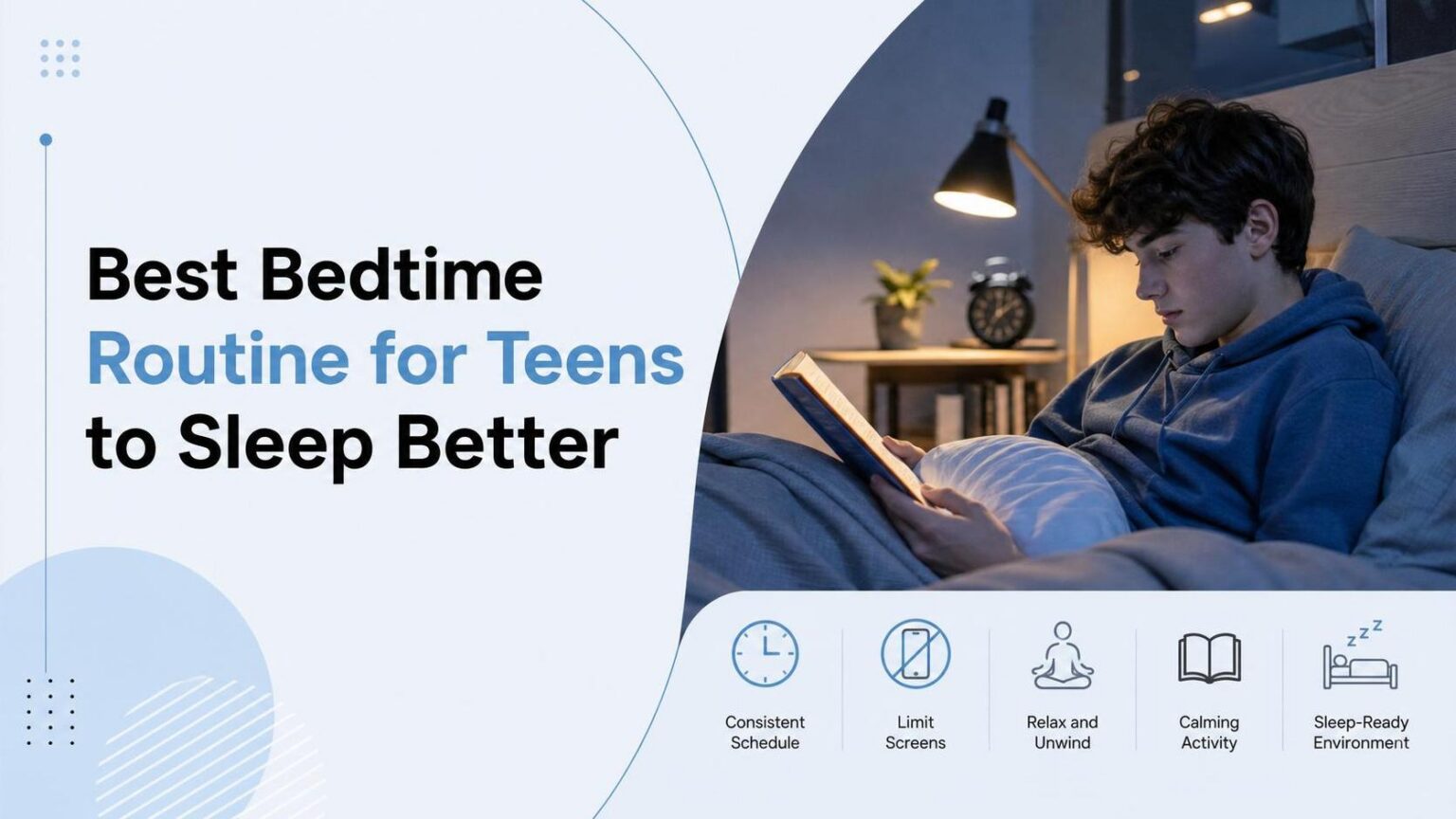

The Best Bedtime Routine for Teens to Sleep Better is not about forcing perfect habits overnight. It is about giving your child a predictable evening rhythm that works with biology, school pressure, friendships, homework, and real family life.
During the teenage years, the teen’s brain naturally shifts later, which means many teenagers do not feel tired when adults expect them to. Add mobile phones, homework deadlines, early school start times, and social stress, and it is easy to see why sleep problems are so common.
Still, teens sleep better when the evening feels calm, consistent, and realistic. A calm bedtime routine can cue the brain that it is time to sleep and can counteract biological shifts that delay sleep. The goal is not a strict military schedule; it is a regular routine your child can repeat most nights.
Why Teen Sleep Is So Different
According to the Centers for Disease Control and Prevention, most teenagers need about 8 to 10 hours of sleep each night. That raises a common parent question: how much sleep is enough for a busy teen who has school, sports, friends, and chores?
The short answer is that most teens need near 10 hours of sleep to feel and function their best, though some do well with slightly less. If your child is moody, dragging through school, relying on caffeine, or struggling to fall asleep, the issue may not be attitude. It may be sleep deprivation.
Teens often experience changes in their sleep patterns, wanting to stay awake later at night and wake later in the morning. This can clash with early school schedules and lead to sleep deprivation, lower energy, and weaker academic performance.
Build a Bedtime Routine That Starts Before Bed
A strong bedtime routine starts earlier than the moment your child climbs into bed. It begins with dinner, homework planning, screen limits, and a clear wake up time. When teens sleep on a predictable rhythm, their body clock gets stronger.
An effective teenage bedtime routine focuses on calming the brain and regulating the body’s natural sleep clock. A well-structured bedtime routine can include systematically powering down electronics and practicing relaxing habits, then getting into bed at a similar time most nights.
Encourage your teen to choose a target bedtime by counting backward from the wake up time. If your child needs to wake at 6:30 for school, going to bed around 9:30 to 10:00 gives a better chance of getting enough sleep.
The Ideal Evening Timeline for Teenagers
Three hours before bed, wrap up intense physical activity, big conflicts, and anything that ramps up adrenaline. Regular exercise is helpful earlier in the day, but late workouts may make some teens feel too alert.
Two hours before bedtime, keep food lighter. A large meal or large snacks too close to bed may cause discomfort and interrupt staying asleep. Limiting large snacks within two hours of bedtime can help avoid disruptions.
One hour before bedtime, encourage your teen to stop heavy homework, avoid screens, and shift toward calming activities. Reading a physical book, journaling, stretching, breathing exercises, or listening to soothing music can make it easier to fall asleep.
Set Consistent Sleep and Wake Times
Consistency in wake times, even on weekends, helps regulate a teenager’s body clock. Encouraging teens to stick to consistent sleep and wake times every day, even on weekends, can help reinforce their body’s natural sleep-wake cycle.
A sleep schedule does not have to be perfect, but it should be steady. If teens sleep until noon on weekends and wake before sunrise for school, Monday morning becomes a shock. A better plan is to keep the wake up time within about one to two hours of the weekday time.
Most teenagers need about 8 to 10 hours of sleep each night to function well, and consistent routines can help regulate their internal clock. If your child gets enough sleep on weekends only, the school week may still bring sleep deprivation and daily sleep problems.
Create a Comfortable Sleep Environment
A comfortable sleep environment should be cool, dark, and quiet, with comfortable bedding and minimal distractions. A cold room between 60°F and 67°F is often conducive for rest, according to guidance summarized by the Sleep Foundation.
Keep the bedroom dark with blackout curtains if outside light leaks in. A white noise machine can mask disruptive sounds, especially if siblings, traffic, or household noise continue later at night.
Keeping the bedroom exclusive for sleeping and resting can improve sleep quality. If your child studies, scrolls, snacks, and watches videos in bed, the brain may stop connecting bed with rest. A comfy chair can become the place for reading or winding down instead.
Handle Screens, Caffeine, and Evening Triggers
The light from electronic devices can trick the brain into thinking it is daytime, which reduces melatonin production and makes it harder to fall asleep. Blue light is only part of the issue; games, messages, and watching tv can also keep emotions high.
Establishing a family rule that personal electronics go to bed at the same time as the teen can reinforce good sleep habits and reduce screen time before bed. Encourage your teen to charge mobile phones and other devices outside the bedroom.
Avoiding caffeinated beverages after 2:00 PM can promote better rest for teenagers. That includes coffee, some teas, soda, pre-workout drinks, and energy drinks. Encourage your teen to avoid caffeine late in the day, because energy drinks can make teens feel wired long after they expect the effect to fade.
Use Stress Tools for a Calmer Night
Stress is one of the biggest reasons teenagers sleep poorly. Teaching teens stress management techniques such as mindfulness activities, positive thinking, and deep breathing can help them relax and manage anxiety more effectively.
Encourage your teen to write worries on a notepad before bed. Keeping a notepad to jot down to-do lists or anxieties can help prevent pre-sleep rumination. Setting aside 15 to 20 minutes of quiet time earlier in the day for journaling or planning can also reduce stress at bedtime.
Sleep helps regulate mood and emotional health, and too little rest can affect mental health. The National Heart, Lung, and Blood Institute notes that chronic sleep deprivation is linked with health concerns, so healthy sleep habits are worth building early.
A Simple Healthy Sleep Routine Teens Can Follow
Here is a practical healthy sleep routine for a school night. Adjust the clock times for your family, but keep the order steady so your child knows what comes next.
After dinner, finish urgent homework and pack the school bag.
Two hours before bed, stop heavy studying, intense arguing, and big snacks.
One hour before bedtime, place the alarm clock across the room and plug in the phone elsewhere.
Do relaxing things such as stretching, reading, quiet drawing, or calming breathing.
Go to bed at the planned time, keep lights low, and use the same wake up time the next morning.
Encourage your teen to track how many hours they actually get for one week. The goal is not blame. It is to notice patterns and make small changes that lead to quality sleep and better mornings.
What If Your Teen Still Cannot Fall Asleep?
If your child lies awake for a long time, have them get out of bed briefly and do something quiet in dim light, such as reading a boring page. Then they can return to bed when sleepy. This keeps bed from becoming a place of frustration.
Sleep research shows that regular sleep timing and light exposure both influence the body clock. Morning light can help teens wake more fully, especially after early school mornings. Evening dimness helps the brain prepare for rest.
If sleep problems continue for weeks, or if your child snores, gasps, has severe anxiety, or cannot stay awake during school, consider talking with a pediatrician or licensed clinician. This article offers general education, not medical advice.
FAQ: Teen Bedtime Questions Parents Ask
What is the 10 5 3 2 1 rule for sleep?
The 10 5 3 2 1 rule is a simple countdown some families use before bed: 10 hours before bed, avoid caffeine; 5 hours before bed, avoid intense exercise if it keeps your child alert; 3 hours before bed, avoid a heavy meal; 2 hours before bed, finish stressful homework; and 1 hour before bedtime, turn off screens and start relaxing activities.
What is the 10 4 3 2 1 rule?
The 10 4 3 2 1 rule is a similar version: 10 hours before bed, stop caffeine; 4 hours before bed, avoid hard workouts; 3 hours before bed, avoid large meals; 2 hours before bed, stop intense schoolwork or heated conversations; and 1 hour before bedtime, use a relaxing bedtime routine.
What does ADHD look like at bedtime?
ADHD at bedtime may look like stalling, sudden bursts of energy, emotional meltdowns, hyperfocus on games, racing thoughts, forgotten tasks, or repeated trips out of bed. For some teens, the quiet of night makes thoughts feel louder. The American Academy of Pediatrics encourages families to work with clinicians when attention, behavior, or rest concerns interfere with daily life.
What is the 3 2 1 bedroom method?
The 3 2 1 bedroom method can be used as a calming reset: choose 3 things to put away, do 2 hygiene tasks, and pick 1 quiet activity. For example, your child clears clothes, books, and dishes; brushes teeth and washes their face; then reads until drowsy.
How can I encourage my teen without nagging?
Encourage your teen by making the plan collaborative. Ask what makes nights hard, offer two choices instead of commands, and praise effort. Teens are more likely to cooperate when they feel respected. Encourage your teen to test one change for seven nights rather than overhaul everything at once.
Is it okay for teens to catch up on sleep during weekends?
A little extra rest on weekends is normal, but extreme catch-up can shift the body clock later. Most teens do better when bedtime and morning timing stay fairly close to the school routine. If your child needs 10 hours of sleep but gets only six on weekdays, weekends alone will not fully solve the problem.
Conclusion: Make Better Nights Feel Possible
The Best Bedtime Routine for Teens to Sleep Better is consistent, calm, and realistic. It protects the hour before bedtime, supports a steady sleep schedule, reduces distractions, and gives teens tools for stress.
Start small tonight. Encourage your teen to choose one screen boundary, one calming activity, and one steady wake time. With patience, good sleep can become less of a battle and more of a family habit.