
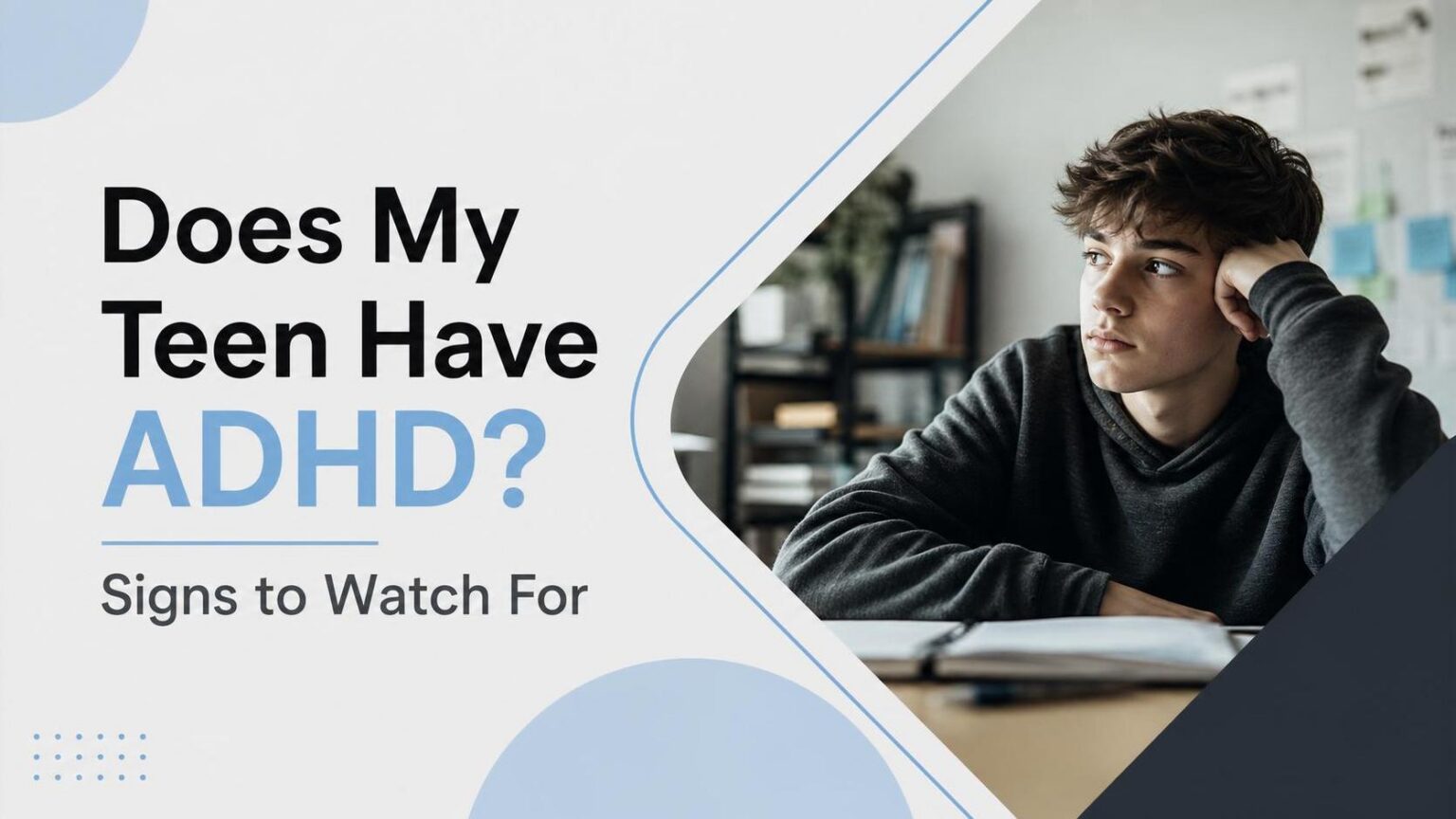

Teenage life can look chaotic even on a good day: shifting hormones, heavier school demands, friendship drama, later nights, and growing independence. So when a teen forgets assignments, zones out during conversations, loses track of time, or acts before thinking, parents often wonder what is typical development and what may signal ADHD.
Attention deficit hyperactivity disorder is not simply “being distracted.” It is a neurodevelopmental disorder that can affect attention, activity level, emotional regulation, planning, motivation, and relationships. For children, teens, and young adults, ADHD symptoms can become more noticeable when expectations increase and support systems become less hands-on.
This guide explains possible signs, how diagnosing ADHD works, what an ADHD test can and cannot tell you, and when to involve a mental health professional. It is educational, not a substitute for medical care, but it can help families feel more prepared for a thoughtful conversation with health care providers.
Understanding ADHD in Teenagers
ADHD stands for attention deficit hyperactivity disorder. You may also see it written clinically as attention deficit hyperactivity disorder ADHD or deficit hyperactivity disorder ADHD in medical and educational materials. However it is written, the key point is that ADHD involves persistent patterns of inattention, hyperactivity, and impulsivity that interfere with a teen’s life across school, home, friendships, or other activities.
The Centers for Disease Control and Prevention offers helpful background through its CDC ADHD resources, including information for families and schools. The National Institute of Mental Health also explains that ADHD can continue across development into adolescence and adulthood.
Many children show bursts of distractibility or high energy, but ADHD symptoms are more persistent, more impairing, and more likely to affect different settings. About 43% of children with ADHD continue into adolescence, which means many teens still need support even if they received help as younger children.
Why ADHD May Become More Visible in the Teen Years
ADHD does not necessarily “appear out of nowhere” in high school. For an ADHD diagnosis, symptoms must begin before age 12, even if the concerns are not fully recognized until later. Some children compensate well in elementary school because parents and teachers provide structure, reminders, and close supervision. As children enter adolescence, those supports often fade.
The teen years bring long-term assignments, multiple teachers, changing classrooms, driving, part-time jobs, dating, social media, and more responsibility. These demands can expose executive functioning challenges, such as planning, prioritizing, organizing materials, remembering deadlines, and starting certain tasks without repeated reminders.
ADHD symptoms can also look different by gender and temperament. Boys may show more hyperactive symptoms, such as restlessness or difficulty staying seated, while girls may appear more daydreamy, anxious, quiet, overwhelmed, or easily distracted. Because inattentive symptoms can be less disruptive, some children are missed until adolescence or even until they are young adults.
Common ADHD Symptoms and Signs to Watch For
Teens with ADHD may not look like the stereotype of a child bouncing off the walls. Some are restless and impulsive; others are mentally foggy, disorganized, or emotionally reactive. The core symptoms are inattention, hyperactivity, and impulsivity, but the way they show up can vary widely.
Parents may notice that a teen starts homework but does not finish, forgets to submit completed work, leaves belongings everywhere, or seems to listen but misses key details. Teachers may report trouble paying attention, inconsistent effort, careless mistakes, or difficulty following multi-step directions. Friends may see interrupted conversations, intense reactions, or social interactions that feel unpredictable.
Specific symptoms are most concerning when they are frequent, long-lasting, and impairing. One hard week does not necessarily point to ADHD. A pattern that lasts months and affects academic performance, family conflict, social functioning, or mental health deserves closer attention.
Inattentive Symptoms
Inattentive symptoms often include difficulty sustaining focus, poor organizational skills, forgetfulness, and trouble completing tasks. Teens may lose things like keys, phones, sports gear, homework, or permission slips. They may avoid long reading assignments, miss steps in directions, or feel paralyzed when a project has several parts.
Some teens with ADHD also have trouble following conversations. They may drift off, interrupt because they fear forgetting their thought, or nod along without absorbing what was said. These ADHD symptoms are sometimes mistaken for laziness, defiance, low motivation, or “not caring,” which can contribute to low self esteem.
Hyperactive Symptoms
Hyperactivity in teenagers may look less like running around and more like fidgeting, tapping, constant phone scrolling, talking excessively, or feeling internally restless. Fidgeting is a common sign of ADHD in teens, especially when they are expected to sit still through long classes, homework sessions, or family events.
Some children and teens describe feeling as though their brain has too many tabs open. They may need movement breaks, doodling, or quiet sensory tools to remain engaged. Hyperactive symptoms can also overlap with anxiety, sleep disorders, stress, or other mental health conditions, so context matters.
Impulsive Behaviors
Impulsive behaviors can include blurting out, interrupting, emotional outbursts, spending money impulsively, speeding, unsafe choices, or risk taking with friends. Teens may understand the rule after the fact but struggle to pause in the moment. This can strain trust with parents and other adults.
Impulsivity can also affect social skills. A teen may overshare, joke at the wrong time, react intensely to rejection, or have difficulty waiting. For teens with ADHD, social skills support can be just as important as school support.
What Undiagnosed ADHD Can Look Like in Teenagers
Undiagnosed ADHD in teenagers can appear as chronic underachievement, messy backpacks, forgotten assignments, missed appointments, chaotic sleep, emotional blowups, procrastination, or conflict at home. Some children are labeled “bright but not trying,” especially when test scores are high but daily work is inconsistent.
Other symptoms may include frequent boredom, difficulty starting chores, trouble paying attention during lectures, and a pattern of needing crisis pressure to finish work. Many teens with ADHD can focus intensely on video games, art, music, sports, or topics they love, then struggle with required tasks that feel repetitive or unclear.
When ADHD is missed, mental health may suffer. Teens may develop anxiety, frustration, shame, or avoidance after years of feeling behind. ADHD symptoms can overlap with anxiety, depression, learning disabilities, trauma responses, substance use, sleep problems, and other mental health conditions. In some cases, these concerns co occur, which is why a thorough evaluation matters.
When Signs Are More Than Normal Teenage Behavior
Everyone forgets things. Many teens procrastinate. Most children push limits at times. The difference with ADHD is pattern, duration, impairment, and consistency across different settings. Symptoms of ADHD must be present in at least two settings, such as home and school, and they must be present for at least six months for an ADHD diagnosis.
Parents can begin by tracking examples of the child’s behavior. Write down what happened, when it happened, how often, what helped, and what made it worse. Include reports from teachers, coaches, tutors, and other adults who know your teen in structured and unstructured environments.
It is also important to consider environmental factors. A chaotic household routine, bullying, grief, a major move, heavy social media use, or poor sleep can worsen focus and mood. These factors do not rule out attention deficit hyperactivity disorder, but they can influence how symptoms appear and what support is needed.
How Diagnosing ADHD Works
Diagnosing ADHD requires a comprehensive evaluation. There is no blood test to diagnose ADHD, and a quick quiz alone cannot provide an accurate diagnosis. Pediatricians, psychologists, psychiatrists, and certain other clinicians can evaluate children and teens, and ADHD can be diagnosed by pediatricians or mental health professionals.
An ADHD assessment typically includes medical and behavioral history, school information, family history, and reports from parents and teachers. Standardized rating scales are used in ADHD assessments, and standardized measurements may assess a child’s task performance, attention patterns, or executive skills. Clinicians may also screen for mental disorders and other conditions that can mimic ADHD symptoms.
The Diagnostic and Statistical Manual, often referred to as the statistical manual, outlines criteria used by clinicians. Symptoms of ADHD must begin before age 12, must last at least six months, and must interfere with functioning. A qualified mental health professional can also help identify anxiety, depression, learning needs, or other mental health concerns that may be part of the picture.
A careful process supports accurate diagnosis. If your teen was previously labeled inattentive or “difficult,” an updated look may reveal that attention deficit hyperactivity disorder ADHD or another concern was missed. On the other hand, diagnosing ADHD too quickly can overlook sleep disorders, trauma, substance use, or learning disabilities.
How to Get Your Child Tested for ADHD
If you are wondering how to get your child tested for ADHD, start with your pediatrician, family physician, school counselor, or a mental health professional. Ask for a full ADHD assessment rather than relying on a single checklist. The American Academy of Pediatrics provides an ADHD clinical practice guideline that emphasizes evaluation across settings and the need to rule out coexisting concerns.
An online ADHD test may help you organize observations, but an ADHD test on a website cannot confirm a diagnosis. A formal ADHD test process may include rating scales, interviews, school records, and sometimes cognitive or academic testing. Bring ADHD test answers, report cards, teacher comments, and examples of the child’s behavior to the appointment.
Some schools can provide educational testing or a school-based ADHD test as part of support planning, though medical diagnosis is usually handled outside the school. A single ADHD test should not be treated as the whole answer. The best evaluations combine data, clinical judgment, history, and input from people who see the teen regularly.
You can also ask whether your teen has ever had ADHD diagnosed previously or whether a prior evaluation was incomplete. If getting ADHD diagnosed feels overwhelming, request a written plan for next steps, including who collects forms, which teachers should respond, and when results will be reviewed.
Treatment and Support Options for Teens with ADHD
The best ADHD treatment for teens is usually individualized. A treatment plan may include education, school accommodations, behavioral therapy, parent support, coaching, medication, sleep routines, and strategies that build independence. The goal is not to change who a teen is; it is to reduce impairment and help children, teens, and young adults use their strengths.
Behavioral therapy can help manage ADHD symptoms effectively, especially when it teaches planning, emotion regulation, communication, and problem-solving. ADHD treatment often includes parent education and support because parents need tools that reduce conflict while increasing structure. Cognitive training may modestly improve attention and memory for some children, but it is typically one part of a broader plan.
Reputable organizations such as CHADD offer education for families navigating attention deficit hyperactivity disorder. A mental health professional can help match supports to your teen’s needs instead of using a one-size-fits-all approach.
School, Home, and Daily Structure
Academic support can include planner checks, breaking long assignments into smaller steps, preferential seating, extended time when appropriate, and help with study skills. Some teens need coaching around taking tests, organizing digital assignments, or emailing teachers before deadlines pass.
At home, a predictable daily schedule can reduce arguments. Set a consistent wake up time, use visual reminders, and create a short after-school reset before homework. A reward program can support new skills when it is realistic, specific, and paired with positive reinforcement rather than criticism.
Behavioral interventions work best when they are simple and consistent. Instead of saying, “Be more responsible,” try, “Put your backpack by the door before 9 p.m.” Children and teens are more likely to succeed when expectations are visible, repeated, and connected to immediate feedback.
Medication Conversations
ADHD medications may be considered when symptoms cause significant impairment. Stimulant medications are the most common medication class for ADHD, and methylphenidate is often considered a first-choice medication for adolescents. Nonstimulant medications may also be considered, especially when stimulants are not a good fit or when other concerns are present.
Prescribed medications should be discussed with a qualified prescriber who can review benefits, side effects, medical history, sleep, appetite, and mental health. Some teens do very well with medication; others need adjustments or different supports. The right treatment is personal, monitored, and collaborative.
When ADHD is treated, many families notice fewer daily battles, improved follow-through, and better emotional recovery after setbacks. Having ADHD treated does not erase challenges, but it can make school, relationships, and independence more manageable for children, teens, and young adults.
Helping Your Teen Without Blame
Parents understandably feel frustrated when reminders do not work. Teens also feel frustrated when they keep disappointing people despite good intentions. A helpful starting point is to separate the teen from the symptoms. ADHD is not an excuse for every behavior, but it can explain why ordinary expectations feel unusually hard.
Use collaborative language: “What part of this is getting stuck?” or “What reminder would help you start?” This approach preserves trust and supports social functioning within the family. It also encourages young adults in training to understand their own brains and advocate for themselves.
For children and teens with ADHD, relationship repair matters. Apologize after arguments, praise effort when you see it, and focus on one target behavior at a time. Too many corrections can make children tune out; clear structure plus warmth is more effective.
FAQ
Does ADHD get worse as a teenager?
ADHD may seem worse in adolescence because school, social life, and independence become more demanding. The underlying attention deficit hyperactivity disorder may not be more severe, but symptoms can become more impairing when teens must manage complex schedules, long assignments, driving decisions, and less adult supervision.
How do I get my child tested for ADHD?
Start with a pediatrician, school counselor, or mental health professional and ask for a thorough evaluation. An ADHD test may include standardized rating scales, interviews, teacher reports, medical history, and school records. Remember that an ADHD test is part of a broader evaluation, not a stand-alone diagnosis.
What does undiagnosed ADHD look like in teenagers?
Undiagnosed ADHD can look like chronic disorganization, unfinished work, emotional outbursts, procrastination, inconsistent grades, forgotten responsibilities, and conflict with parents. Symptoms of ADHD can also look like anxiety or low motivation, which is why an accurate diagnosis is important.
What is the best treatment for ADHD in teens?
The best treatment is individualized and may include behavioral therapy, parent education, school supports, lifestyle routines, and medication when appropriate. Teens with ADHD often benefit most when treatment addresses both daily skills and mental health.
Can a teenager have ADHD if they get good grades?
Yes. Some children and young adults earn good grades while working far harder than peers, staying up late, relying on last-minute pressure, or melting down at home. Good grades do not rule out ADHD symptoms if attention, organization, and emotional regulation are causing impairment.
Is an online ADHD test useful?
An online ADHD test can help you notice patterns and prepare questions, but it cannot diagnose ADHD. Use ADHD test results as a conversation starter with health care providers or a mental health professional.
Can ADHD exist with anxiety or other conditions?
Yes. ADHD can co occur with anxiety, depression, learning differences, sleep problems, and other mental health conditions. Because symptoms can overlap, a thorough evaluation helps determine what is driving the difficulty and what support may help.
Conclusion: Next Steps if You Are Concerned
If you suspect your teen may have ADHD, you do not need to wait for a crisis. Start documenting patterns, ask teachers what they observe, review sleep and stress, and schedule a conversation with a pediatrician or mental health professional. An ADHD test can be useful, but the strongest path is a comprehensive evaluation that looks at the whole teen.
With accurate diagnosis, practical support, and compassionate follow-through, teens with ADHD can build confidence, improve routines, strengthen relationships, and move toward independence as young adults. If concerns are affecting school, home, safety, or mental health, consider reaching out to a trusted provider for guidance on the next step.