

Signs Your Teen’s Anxiety or Depression Is More Serious Than You Think
Medical Disclaimer: The content provided in this article is for informational purposes only and does not constitute medical advice. If your teen is expressing suicidal thoughts, engaging in severe self-harm, or is in immediate danger, please call 988 or go to the nearest emergency room immediately. For confidential assessment and admissions, contact Teen Mental Health Facility.
Introduction: The Fine Line Between "Moodiness" and Crisis
Every parent of a teenager knows the drill. The slammed doors. The one-word answers. The sudden desire to sleep until noon on Saturdays.
Adolescence is a time of massive upheaval—hormonal, social, and neurological. Some level of moodiness is not only expected; it is developmentally appropriate.
But when does “normal” cross the line into dangerous?
When does “I’m just tired” actually mean “I don’t have the will to live”? When does “I’m stressed about finals” turn into a debilitating anxiety disorder that requires clinical intervention?
This uncertainty is paralyzing for parents. You don’t want to pathologize normal growing pains, but the fear of missing a critical red flag keeps you up at night.
At Teen Mental Health Facility, we help families decipher these signals every day. In this guide, we will move beyond the generic advice and help you identify the specific, often subtle signs that your teen’s struggle has escalated from “difficult” to “dangerous.”
If your intuition is screaming that something is wrong, listen to it. Explore our Teen Treatment Programs.
The "Functional" Trap: Why Good Grades Can be Deceiving
One of the most dangerous myths in mental health is that a teen in crisis will always fail school or act out.
High-Functioning Depression and Anxiety are rampant in today’s youth.
- The Perfectionist: Your teen has a 4.0 GPA, is captain of the team, and never misses a deadline.
- The Reality: They are fueled by a terror of failure. Their “drive” is actually a Flight response. They believe that if they stop moving, they will shatter.
The Red Flag: Look for brittleness. If a B+ on a quiz causes a meltdown, or if missing one soccer practice induces a panic attack, this is not resilience; it is fragility masking severe anxiety.
The Physical (Somatic) Language of Distress
Teens often lack the emotional vocabulary to say, “I am clinically depressed.” Instead, their body speaks for them.
The “Monday Morning” Sickness: If your teen frequently complains of headaches, stomach aches, or nausea specifically on school mornings, this is a classic sign of anxiety manifesting physically. The gut-brain axis is powerful; their stomach really does hurt, but the cause is neurological, not viral.
The Sleep Reversal:
- Depression: Sleeping 14 hours a day and still waking up exhausted (Psychomotor Retardation).
- Anxiety: Being “tired but wired.” Staying awake until 4 AM because they cannot turn off the racing thoughts.
Behavioral Shifts: The "Replacement" of Personality
You are looking for a departure from their baseline, not a comparison to other kids.
1. Abandoning the "Loves"
If your teen lived for skateboarding and hasn’t touched their board in a month, or if they were an avid gamer who hasn’t logged on in weeks, take note. Anhedonia (the inability to feel pleasure) is a hallmark of major depression. It isn’t that they “grew out of it”; it’s that the brain’s reward system has shut down.
2. The "Masking" Crash
Does your teen hold it together perfectly at school but explode the moment they get into the car or walk through the front door? This is Restraint Collapse. It means they are using every ounce of energy to “mask” their symptoms in public, leaving them with zero emotional regulation at home. This is a sign their coping reserves are empty.
3. Radical Change in Peer Group
Adolescence is about finding your tribe, but a sudden shift from a supportive friend group to a group engaging in high-risk behaviors (drugs, truancy) often signals a desire to numb out or self-destruct.
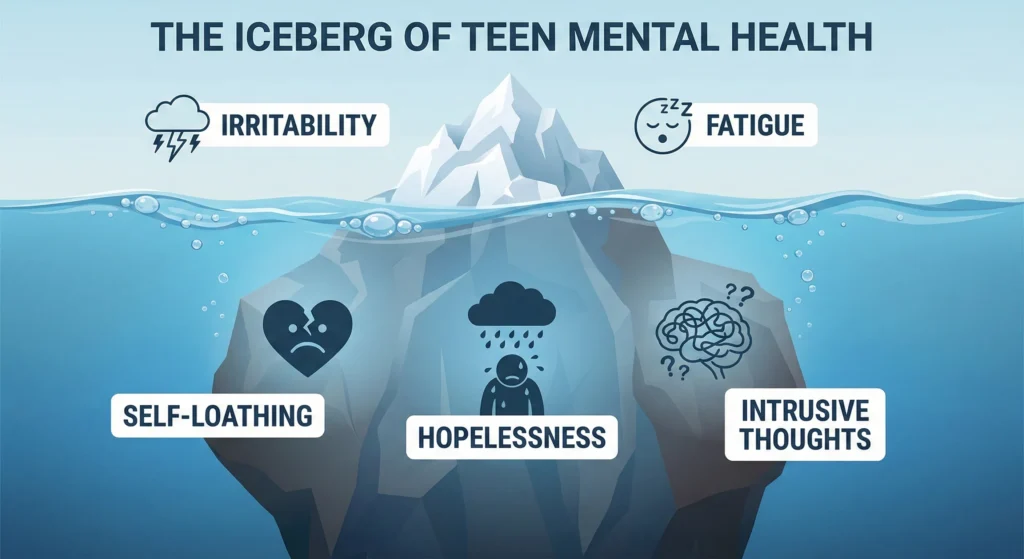
The Digital Cry for Help
Parents often feel guilty about “snooping,” but in 2026, your teen’s digital life is their real life.
The Algorithm Doesn’t Lie: If you look at their TikTok or Instagram “For You” page, what do you see?
- If it is endless videos about “sad core,” self-harm, or eating disorders, this is a mirror of their internal state. They are seeking validation for their pain.
The “Finsta” (Fake Instagram): Many teens have a public profile for grandma and colleges, and a private, locked profile where they post about their true feelings. If you notice they are constantly on their phone but never posting on their main account, they may be living a double life of digital distress.
Substance Use: Self-Medication, Not Just "Partying"
If you find a vape pen or alcohol, your first instinct might be to ground them. But you need to ask why they are using it.
- Marijuana: Often used to silence the “inner critic” of depression or induce sleep.
- Nicotine/Vaping: A powerful stimulant often used by teens with undiagnosed ADHD or severe anxiety to focus or calm down quickly.
- Alcohol: Liquid courage for social anxiety.
If your teen reacts with panic or extreme rage when the substance is removed, they aren’t just “mad about the rules”; they are terrified of facing their brain chemistry without a buffer.
The Danger Zone: Self-Harm and Suicidality
Non-Suicidal Self-Injury (NSSI): Cutting, burning, or hitting oneself is not always a suicide attempt. It is often a maladaptive way to regulate emotion. The physical pain releases endorphins that numb the emotional pain.
- Parent Response: Do not scream. Do not shame. Say: “I see you are in so much pain that you felt this was the only way to cope. Let’s find a safer way to handle those feelings.”
Passive Suicidality: You don’t always hear, “I want to die.” Listen for:
- “I just want to go to sleep and not wake up.”
- “Everyone would be better off without me.”
- “Nothing matters anyway.”
- Giving away prized possessions.
These are not dramatic statements; they are testing the waters. Take them seriously every single time.
How to Start the Conversation (Without a Slammed Door)
If you see these signs, how you approach your teen matters.
1. Timing is Everything Do not bring this up when they are tired, hungry, or rushing to school. Pick a low-pressure time, like a car ride (where eye contact isn’t required) or while walking the dog.
2. The “I Notice” Script Avoid “You” statements (“You are sleeping too much”). Try this: “I’ve noticed you haven’t been hanging out with [Friend’s Name] lately, and you seem really down. I love you, and I’m not judging you, but I am worried. How heavy does life feel right now on a scale of 1 to 10?”
3. Offer a Third Party Teens often don’t want to talk to parents because they don’t want to worry you. Say: “I know talking to me might be weird. Would you be open to talking to a therapist just once to see if it helps relieve some of this pressure?”
Levels of Care: When Weekly Therapy Isn't Enough
If your teen is in the “Danger Zone,” a once-a-week therapy appointment is like putting a band-aid on a bullet hole. They may need a higher level of care.
- Intensive Outpatient (IOP): 3-4 days a week after school. Great for teens who can still function academically but need a “community” of healing.
- Partial Hospitalization (PHP): Full-day treatment (school + therapy). Essential for teens refusing school or needing medication stabilization.
- Residential Treatment: 24/7 care. Necessary for teens who cannot stay safe at home due to self-harm or severe substance use.
At Teen Mental Health Facility, we provide all levels of care to ensure your child gets exactly the support they need.

Conclusion: You Are Their Anchor
Navigating this is terrifying. You might feel guilty, wondering if you caused this. Let go of the guilt. It is not useful. Mental health is a complex mix of genetics, biology, and environment.
What matters now is that you are the anchor. Your teen feels like they are drowning in a storm. They need to know that you are sturdy, that you are not afraid of their darkness, and that you will not stop fighting for them until they are safe.
We are here to hold the rope with you.
If you are seeing these signs, contact Teen Mental Health Facility today for a confidential assessment.
Frequently Asked Questions
Is it just hormones? Hormones amplify emotions, but they don’t cause persistent hopelessness or self-harm. If the behavior stops daily life, it is not just hormones.
Will asking about suicide put the idea in their head? No. Research proves this is a myth. Asking directly “Have you thought about hurting yourself?” actually lowers anxiety because they feel relieved they don’t have to hide the secret anymore.
Can they get better? Yes. The teenage brain is incredibly plastic (changeable). With the right skills (CBT/DBT) and support, teens can rewire their brains for resilience and go on to live happy, healthy lives.
What if they refuse help? As a parent, you have the legal right to consent to treatment for a minor. While we prefer collaboration, sometimes you have to make the executive decision to save their life. We can guide you on how to do this safely.