
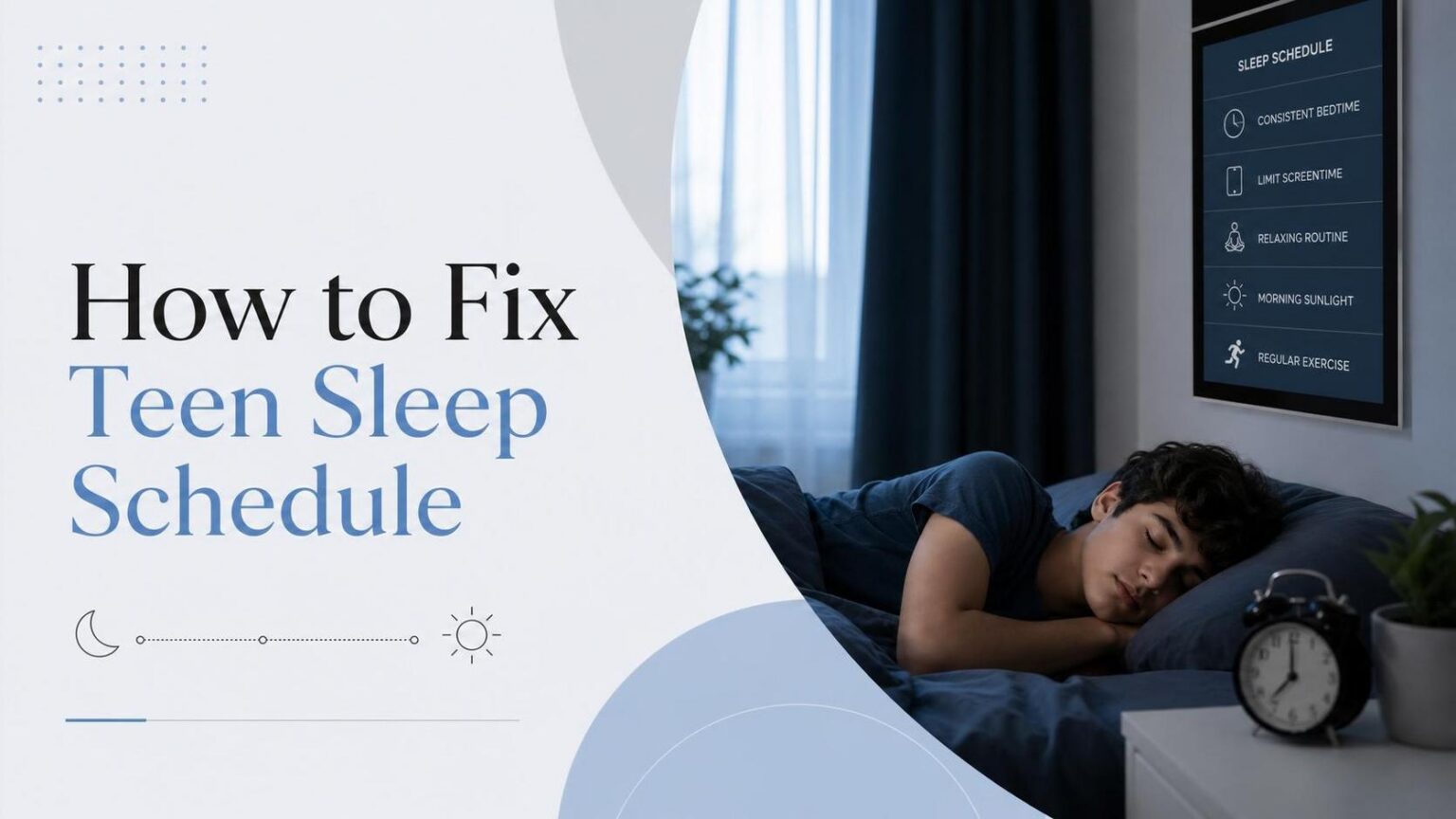

If your teenager cannot fall asleep before midnight, drags through breakfast, and seems wired again by late evening, you are not alone. Families often wonder how much sleep teens truly need, why mornings feel so hard, and what actually helps without turning bedtime into a nightly argument. The good news: with a realistic plan, better boundaries, and steady routines, teen sleep can improve.
During the teen years, biology, school demands, social life, extracurricular activities, homework, and electronic devices all collide. Most teens are not simply being difficult when they resist an earlier bedtime. Teenagers experience a natural shift in circadian rhythm during puberty, which means their body clock starts pushing them toward later sleep and wake times. This shift delays bedtime until around 11:00 PM or later, even when an early school alarm is waiting.
Why Teenagers Suddenly Struggle With Sleep
Teenagers sleep patterns change because circadian rhythms shift later during puberty. The hormone melatonin, which helps signal that it is time to rest, is released later in many adolescents. Exposure to blue light delays melatonin release in teens, and using tech at night delays melatonin production even more.
This does not mean teens should simply stay up as late as they want. It means parents and caregivers may need a smarter approach. The internal clock can be guided, but it usually responds better to consistency than lectures. Morning sunlight exposure helps regulate the body’s internal clock, while calming routines in the evening hours make it easier to fall asleep.
According to the American Academy of Sleep Medicine, most adolescents need 8 to 10 hours of sleep each night. Other child health sources often describe the ideal as 9 to 9½ hours of sleep nightly, and many experts say teens need 9 to 10 hours of sleep nightly for optimal functioning. However you phrase it, the message is clear: young people need more sleep than many families realize.
How Much Sleep Do Teens Really Need?
Parents frequently ask how much sleep is enough. For high school students, the usual target is 8 to 10 hours of sleep, with many doing best closer to 9 or 10 hours of sleep. Teens need 8 to 10 hours of sleep for optimal performance, and enough quality sleep supports mood, attention, immune function, and growth.
How much sleep your child needs may vary slightly, but if they regularly feel tired, nod off in class, sleep for hours on weekends, or depend on energy drinks to stay awake, they may be sleep deprived. Less than 20% of teens get recommended sleep on school nights, and less than 20% of teens get the recommended sleep amount overall, according to public health data summarized by the Centers for Disease Control and Prevention.
So, how much sleep should families aim for during the school year? A practical goal is a routine that allows 9 to 10 hours of sleep most nights. Younger children often need even more, but teens still have a developing brain, growing body, and demanding schedule. Sleep is crucial for memory consolidation and cognitive function, and sleep is when the body repairs tissue and builds muscle.
Signs Your Teen Is Not Getting Enough Sleep
Sleep deprivation in teenagers can look like laziness, defiance, anxiety, or lack of motivation. In reality, lack of sleep increases the likelihood of irritability and mood instability. Deep sleep helps process emotions and regulate stress hormones like cortisol, so when teens miss needed rest, everyday problems can feel much bigger.
Common signs of sleep deprivation include daytime sleepiness, trouble waking, falling asleep after school, poor concentration, headaches, low frustration tolerance, and lower academic performance. Sleep-deprived teens may struggle with memory and analytical thinking, and sleep deprivation impairs attention and problem-solving capabilities.
There are safety concerns, too. Sleepy driving is a leading cause of traffic accidents among teenagers, and drowsy driving should be treated as seriously as any other major risk. Sleep deprivation impairs impulse control and leads to risky behaviors, while chronic sleep deprivation is linked to long-term health risks like obesity and cardiovascular issues. Chronic sleep deprivation can lead to obesity in adolescents, and insufficient sleep is also associated with anxiety and depression in teens.
Set a Regular Sleep Schedule That Actually Works
A consistent sleep schedule improves health because the internal body clock likes predictability. Instead of suddenly forcing a bedtime two hours earlier, move the routine gradually. Shift bedtime and wake up time by 15 to 30 minutes every few days until your teen reaches a workable pattern.
A regular sleep schedule should stay fairly steady across the school week and weekends. Social jet lag occurs when weekend wake times vary significantly from weekdays. Sleeping until noon on Saturday may feel restorative, but it can make monday morning brutal and restart the cycle of sleep problems.
For a realistic sleep schedule, begin with the required wake up time, then count backward. If your teen needs to wake up at 6:30 a.m., getting 9 hours means lights out around 9:30 p.m. If that sounds impossible right now, the first step may be reducing a midnight bedtime to 11:30, then 11:00, and so on.
Morning Light and Evening Darkness Reset the Body Clock
Light exposure is one of the strongest signals for circadian rhythms. Bright light in the morning tells the brain that the day has started. Open curtains, eat breakfast near a sunny window, walk outside, or sit in daylight before school if possible. This helps the body’s internal clock anchor an earlier rhythm.
At night, the opposite matters. Bright screens, overhead lights, mobile phones, gaming devices, and laptops can all tell the brain to stay awake. Electronic devices are especially tempting because they combine blue light, social reward, and mental stimulation. Technology use at night cuts into teens’ sleep time, and limiting evening screen time can improve sleep quality.
Parents should limit electronics before bedtime in a way that is clear and consistent. For example, create a family charging station outside bedrooms, set app limits, and agree that schoolwork requiring screens ends earlier when possible. These steps support healthy sleep without making every night a battle.
Build Healthy Sleep Habits Without Power Struggles
Healthy sleep habits work best when they are simple enough to repeat. Start with a wind-down routine of 30 to 60 minutes: dim lights, shower, read, stretch, journal, prepare clothes, and avoid stressful conversations right before bed. Good sleep habits are not about perfection; they are about giving the brain repeated cues that rest is coming.
Good sleep hygiene also includes keeping the bedroom cool, dark, and quiet. Use the bed mainly for rest, not scrolling, studying, or gaming. If a teenager cannot fall asleep after about 20 to 30 minutes, they can get up briefly and do something quiet in low light until sleepy, then return to bed.
Healthy sleep habits become easier when the whole home respects them. That may mean lowering household noise, planning homework earlier, or protecting downtime after intense activities. Good sleep habits do not remove every challenge, but they make better sleep more likely.
Food, Caffeine, Exercise, and the 10-4-3-2-1 Rule
What is the 10 4 3 2 1 sleep rule? It is a simple sleep hygiene framework some families use: 10 hours before bed, avoid caffeine; 4 hours before bed, avoid intense exercise; 3 hours before bed, finish heavy meals; 2 hours before bed, wrap up homework or stressful tasks; 1 hour before bed, turn off screens. It is not a medical rule, but it can help teens create healthy sleep habits.
Caffeine can linger longer than many young people expect, so avoid caffeine in the afternoon and evening. This includes coffee drinks, teas, sodas, pre-workout products, and energy drinks. A heavy meal right before bed can also make it harder to fall asleep, while regular physical activity earlier in the day can support healthy sleep.
Naps require balance. A short nap in the early afternoon may help some teens feel alert, but long or late naps can delay bedtime. If your teen needs more hours of rest, it is usually better to protect night routines than rely on long after-school naps.
What About School Start Times and Packed Schedules?
Early school start times are a major reason many teens do not sleep on school nights as much as they need. School schedules often conflict with teen biology, especially when buses, sports, jobs, and homework extend the day. Less than 20% of teens get recommended sleep hours, so this is not just a family discipline issue.
Many teens go to bed late because the workload is real. Helping teens may mean looking honestly at commitments. Can homework start earlier? Can activities be reduced during the school year? Can phones be parked before the final hour of the night? Can teachers or counselors help when demands are overwhelming?
During a busy school year, helping teens protect sleep may require saying no to something good so they can get the sleep their brain and body need. Young people often need adults to set the structure they cannot yet consistently set for themselves.
When a Teen Cannot Fall Asleep: Practical Troubleshooting
If your teen says, “I’m not tired,” remember that circadian rhythms may be delayed. Sleep phase delay causes teens to sleep later at night, and sleep phase delay can become a real pattern when late nights and late weekend mornings repeat. Teens’ circadian rhythms shift, making them sleep later, but routines can still help.
Try making the hour before bed boring in the best way. Reduce stimulation, end arguments, prepare tomorrow’s bag, and choose calming activities. If worry is the issue, keep a notebook beside the bed for tomorrow’s tasks. If the room is too warm, noisy, or bright, adjust the environment.
If your child continues to have serious sleep problems, snores loudly, gasps, has restless legs, or shows excessive daytime sleepiness despite enough time in bed, consider speaking with a pediatrician or sleep specialist. Sleep apnea, anxiety, depression, medications, and other health factors can affect sleep. Resources such as MedlinePlus and the National Heart, Lung, and Blood Institute offer helpful background, but they do not replace individualized care.
Helping Teens Buy Into the Plan
Helping teens works better when they understand the “why.” Instead of saying, “You need to sleep because I said so,” explain that healthy sleep affects mood, skin, sports performance, learning, driving safety, immune function, and more energy the next day. Connect the goal to what your teen already cares about.
Let them help design the sleep habits plan. Ask what bedtime routine feels realistic, what makes it hard to fall asleep, and what support they want. Helping teens feel respected increases cooperation. Young people are more likely to follow a plan they helped create.
Rewards can help, but avoid turning sleep into a punishment system. The goal is not control; the goal is enough sleep, better sleep, and a home rhythm that supports health. Celebrate small wins, like getting screens out of the bedroom three nights in a row or waking with less conflict.
FAQ: Teen Sleep Questions Parents Ask Most
At what time should a 15 year old go to bed?
A 15 year old should usually go to bed early enough to allow 8 to 10 hours of sleep before the morning alarm. If they must wake up at 6:30 a.m., a reasonable target is around 9:30 to 10:30 p.m. The exact time depends on how much sleep they need, how quickly they fall asleep, and their school schedule.
What is the hardest age for a teenager?
There is no single hardest age for every family, but many parents find ages 13 to 16 challenging because puberty, identity, independence, social pressure, and sleep patterns are all changing at once. Most teens at this stage want more freedom but still need structure, especially around healthy sleep habits.
Does sleep affect A1c levels?
Sleep may influence blood sugar regulation, appetite hormones, and insulin sensitivity, which can relate to A1c over time. However, A1c is affected by many factors, including diet, activity, medication, genetics, and health conditions. Families concerned about diabetes risk or A1c should talk with a qualified clinician.
Why does my teen wake up exhausted after enough hours in bed?
Time in bed is not always the same as quality sleep. Frequent waking, stress, uncomfortable temperature, sleep apnea, late screens, caffeine, or irregular routines can all reduce restfulness. If a teen has ongoing daytime sleepiness, it is worth discussing with a healthcare professional.
Is it okay for teens to sleep in on weekends?
A little extra rest can help, but large shifts can worsen social jet lag. Try to keep wake times within one to two hours of weekdays. This protects the sleep schedule and makes school mornings easier.
How can I help my teen get more sleep without fighting?
Start collaboratively. Choose one or two changes, such as charging phones outside the bedroom and setting a consistent wind-down time. Helping teens gradually build healthy sleep habits is usually more effective than demanding an instant overhaul.
Conclusion: Start Small, Stay Consistent
Fixing adolescent rest is not about one perfect bedtime; it is about creating repeatable cues that support teen sleep, steady mornings, and calmer evenings. Begin with one change this week: morning light, fewer screens before bed, a consistent wake time, or a 30-minute earlier wind-down.
If you are trying to improve a teen sleep schedule, remember that biology, school pressure, and habits all matter. With patience, structure, and support, your family can move toward healthy sleep, fewer exhausted mornings, and better sleep one night at a time. If concerns persist, reach out to your pediatrician for personalized guidance.