
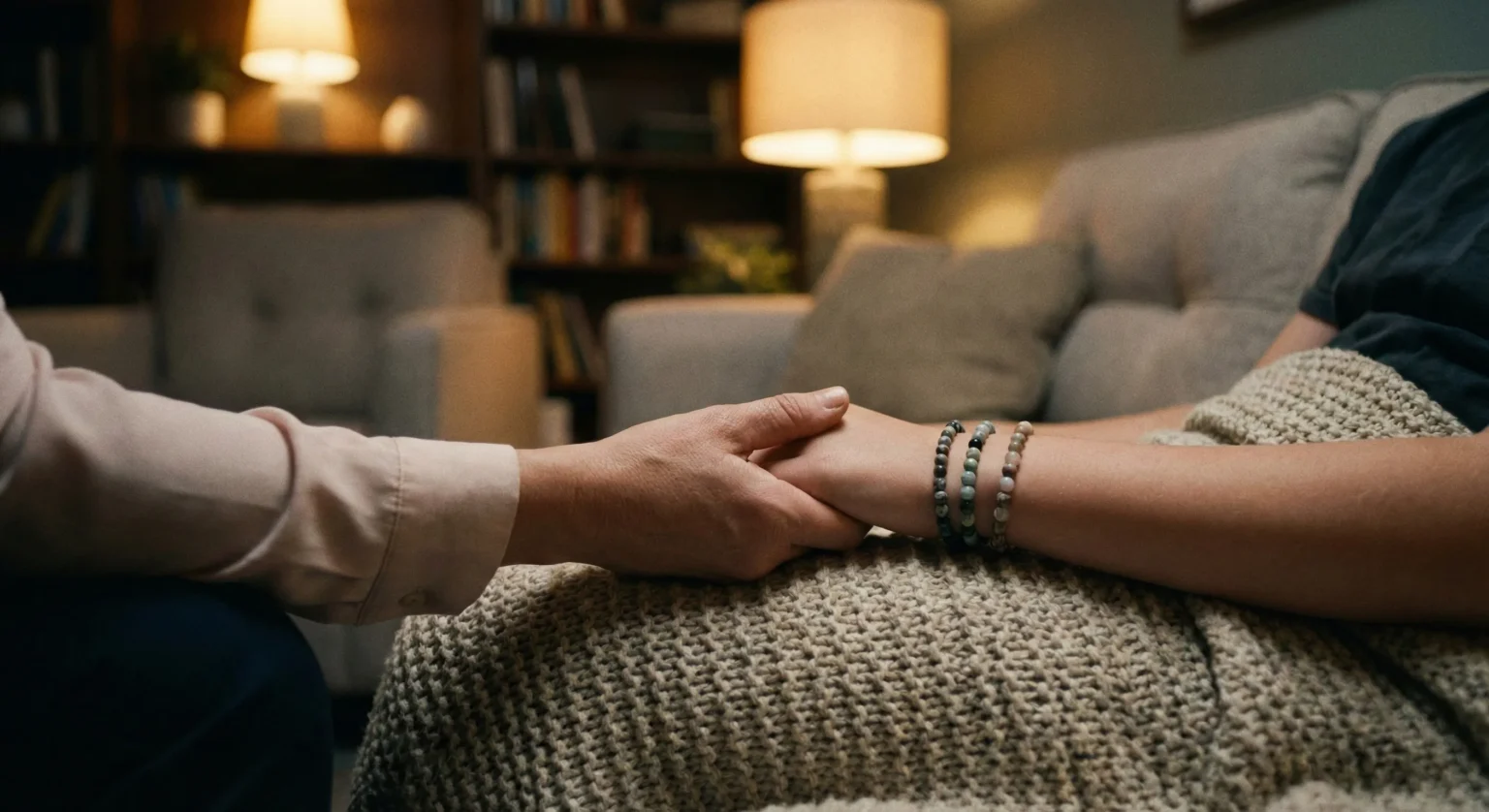

Understanding Teen Self-Harm: A Parent’s Guide to Healing the Pain You Can’t See
Medical Disclaimer: The content provided in this article is for informational purposes only and does not constitute medical advice. While Non-Suicidal Self-Injury (NSSI) is distinct from suicide attempts, it is a serious risk factor. If your teen needs immediate medical attention for a wound, or if they are expressing intent to end their life, please call 988 or go to the nearest emergency room immediately. For confidential assessment and admissions, contact Teen Mental Health Facility.
Introduction: The Moment the World Stops
There is perhaps no moment more terrifying for a parent than discovering that their child is hurting themselves.
Maybe you saw scars on their arm when their sleeve slipped up. Maybe you found a razor blade hidden in a phone case. Or maybe the school nurse called.
In that moment, your world tilts on its axis. A flood of emotions hits you: Terror. “Is my child trying to die?” Guilt. “Did I cause this?” Anger. “Why would they do this?”
Your instinct is to panic. You want to scream, cry, or strip their room bare to keep them safe.
Breathe.
At Teen Mental Health Facility, we work with families in this exact moment of crisis every day. We want you to know three things immediately:
- You are not alone. Self-harm is alarmingly common, affecting nearly 17% of adolescents.
- This is rarely a suicide attempt. It is usually a desperate attempt to survive overwhelming emotions.
- Recovery is possible. With the right treatment, teens can learn new ways to cope.
In this comprehensive guide, we will walk you through the scary reality of Non-Suicidal Self-Injury (NSSI). We will explain the brain science behind why it helps them, debunk the “attention-seeking” myth, and provide a roadmap for healing that brings your family back together.
If you are currently in crisis, explore our Self-Harm and DBT Programs.
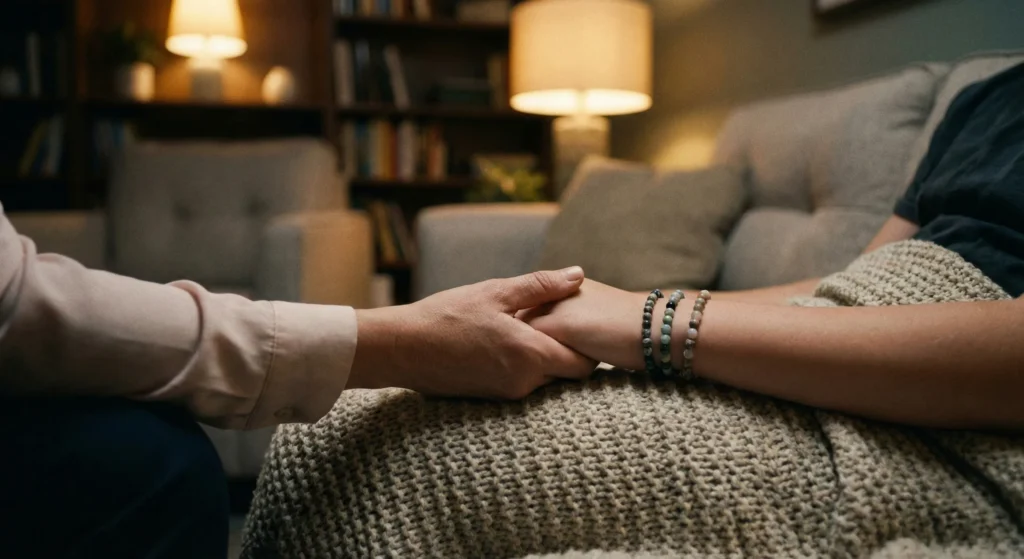
What Is NSSI? (Defining the Behavior)
Non-Suicidal Self-Injury (NSSI) is the deliberate destruction of body tissue without the intent to die. Common forms include:
- Cutting (arms, thighs, stomach).
- Burning.
- Scratching to the point of drawing blood.
- Hitting oneself or banging head against walls.
The Crucial Distinction:
- Suicide: The goal is to end all feeling/consciousness permanently.
- Self-Harm: The goal is to feel better or to feel something right now. It is a maladaptive coping mechanism designed to regulate emotion.
The "Why": The Neuroscience of Pain
This is the hardest part for parents to understand. How does pain make you feel better?
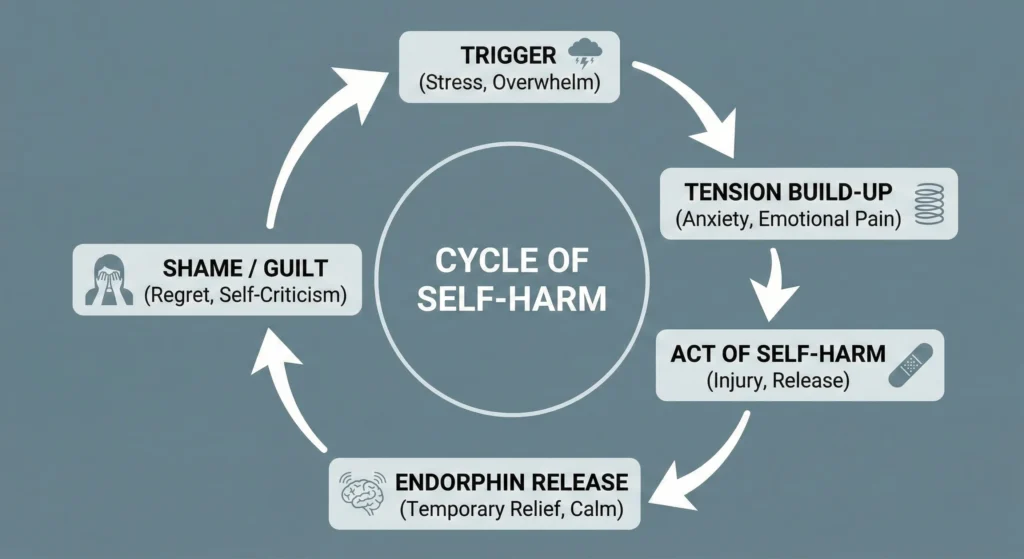
To the teen brain, emotional pain and physical pain travel on similar neural pathways. When a teen is overwhelmed by anxiety, shame, or numbness, their internal pressure cooker is at 100%.
The Release Valve: When they cut or burn, the body perceives a physical injury.
- Endorphin Rush: The brain releases endogenous opioids (natural painkillers) and dopamine to soothe the wound.
- Calm: This chemical flood brings a sudden, intense wave of calm. It lowers the heart rate. The racing thoughts stop.
- The Addiction: Because it works fast, the brain learns: “Next time I feel sad, I should do this again.” It becomes a chemical addiction to their own endorphins.
Debunking the Myths
Myth 1: “They are just doing it for attention.” Fact: Most self-harm happens in secret. Teens go to great lengths to hide scars (wearing hoodies in summer). If a teen does show you their cuts, it is not “drama”—it is a cry for help because they are scared of their own behavior.
Myth 2: “It’s just a Goth/Emo phase.” Fact: Self-harm affects straight-A students, athletes, cheerleaders, and gamers. It crosses all social cliques. It is a symptom of internal distress, not a subculture trend.
Myth 3: “If I take away the razors, they will stop.” Fact: While removing tools is a good safety precaution, it does not treat the urge. If a teen needs to regulate, they will find a way (breaking a pencil, using fingernails). You must treat the feeling, not just the tool.
The "Numbing" Response: Feeling Real Again
While some teens cut to release anger, others cut to break through Dissociation. Depression can make a teen feel “dead inside” or like they are floating.
- The Logic: “I feel like a ghost. If I see blood, or feel pain, I know I’m real. I know I’m still here.” In this case, the pain is a grounding technique gone wrong.
Warning Signs: What Parents Miss
Because teens are experts at hiding, you need to look for subtle shifts.
- Clothing Choices: Wearing long sleeves or pants in hot weather. Refusing to wear swimsuits or change for gym class.
- Unexplained Injuries: Frequent “cat scratches,” bruises, or burns that they explain away clumsily.
- Blood stains: Small spots of blood on sheets, towels, or tissues in the trash.
- Hoarding Sharps: Finding razors (removed from the plastic casing), pencil sharpeners taken apart, or glass shards in their room.
- Isolation: Spending long periods in the bathroom or bedroom, especially after an argument or bad day.
Digital Self-Harm: A New Phenomenon
In 2026, we are seeing a rise in Digital Self-Harm. This is when a teen anonymously posts mean comments about themselves online, or baits others into bullying them.
- Why? It validates their inner self-loathing. If they feel worthless, seeing it written on a screen feels “true.” It creates a similar emotional spike to physical pain.
How to React: The "Calm Anchor" Approach
If you discover self-harm, your reaction sets the tone for recovery. The Goal: Connection, not punishment.
What NOT to do:
- Do not scream. Your panic will make them feel unsafe and guilty, fueling the shame cycle.
- Do not punish. Grounding them for cutting tells them they are “bad” for being in pain.
- Do not demand promises. “Promise me you’ll never do it again.” They cannot promise this yet. If they slip, they will lie to you to avoid disappointing you.
What TO do:
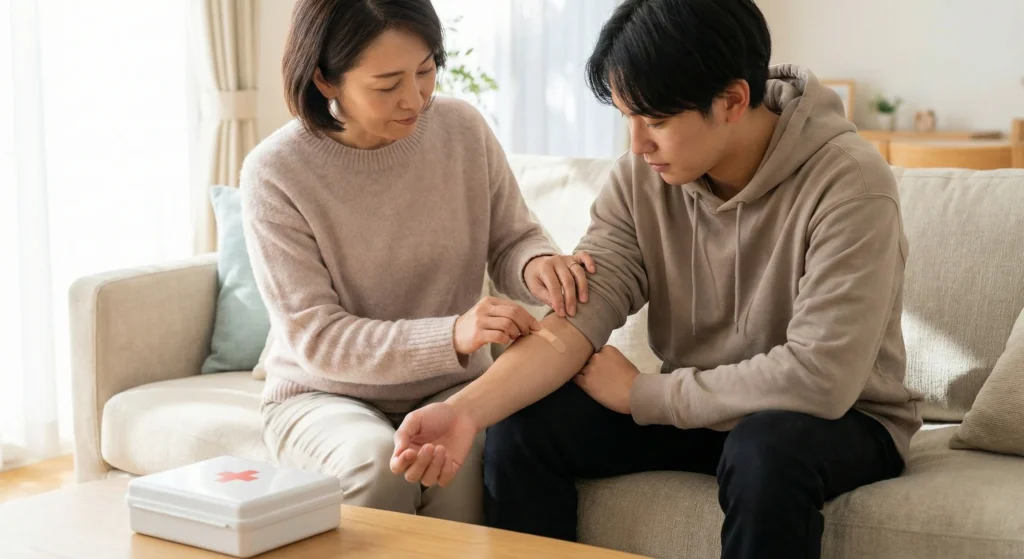
- Tend to the wound. If it is fresh, get the first aid kit. Clean it. Bandage it. Do this tenderly, without lecturing. This act of care says: “You tried to hurt this body, but I am going to care for it. You are worthy of care.”
- Validate the pain. Say: “I can see you are in so much pain that this felt like the only way to handle it. I am scared, but I am here. We are going to figure this out.”
Treatment: Why Talk Therapy Isn't Enough
You cannot just “talk” a teen out of an addiction to endorphins. You need skills training. The gold standard for treating NSSI is Dialectical Behavior Therapy (DBT).
How DBT Works for Self-Harm
DBT assumes that the teen lacks the skills to tolerate distress. It replaces the maladaptive behavior (cutting) with adaptive behaviors.
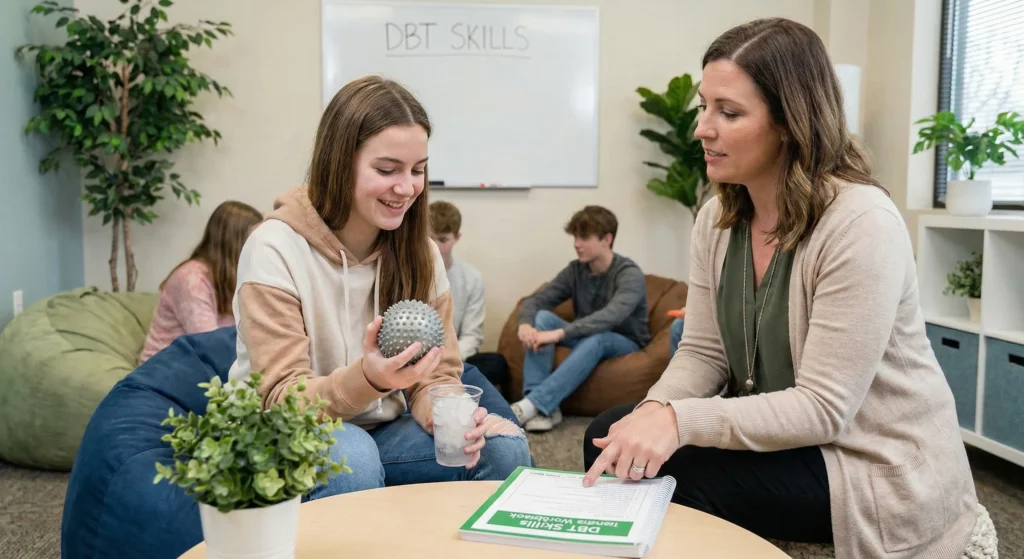
1. Distress Tolerance (TIPP Skills): We teach teens how to change their body chemistry without cutting.
- Temperature: Holding ice cubes in their hands or splashing freezing water on their face. This shocks the system and lowers the heart rate (Mammalian Dive Reflex), providing the same “reset” as cutting without the damage.
- Intense Exercise: Sprinting or doing burpees to burn off the rage energy.
2. Emotion Regulation: Learning to label the emotion. “I am not ‘crazy’; I am experiencing shame.”
3. Chain Analysis: We map out the relapse.
- Trigger (Math Test) -> Thought (“I’m stupid”) -> Physical Sensation (Tight Chest) -> Action (Cutting) -> Result (Relief then Shame).
- We identify where in the chain they could have used a skill (Ice) instead.
Levels of Care: Do They Need Rehab?
If the self-harm is superficial and infrequent, weekly DBT therapy may be enough. However, you should consider a higher level of care (PHP or Residential) if:
- The wounds are becoming deeper or requiring stitches (escalation).
- They are cutting on “high lethality” areas (neck, inner thighs, wrists).
- They are expressing suicidal thoughts alongside the self-harm.
- They cannot stop despite wanting to.
At Teen Mental Health Facility, our residential and PHP programs provide a controlled environment where teens can’t access sharps, breaking the cycle while they learn the skills to cope.
The Role of the Family: Creating a "Validation Environment"
Teens who self-harm are often highly sensitive (Bio-Social Theory). They feel emotions at volume 10. If they grow up in an environment where they are told, “Stop crying,” or “You’re overreacting,” they learn their emotions are wrong.
Family Therapy Goals:
- Teaching parents to validate the emotion, even if they disagree with the behavior.
- “It makes sense that you are angry about being grounded” (Validation) vs. “Stop being a brat” (Invalidation).
- Creating a “Safety Plan” for the home (locking up sharps/medications) without making the house feel like a prison.
Conclusion: The Scars Do Not Define Them
Finding out your teen self-harms feels like a loss of innocence. But it can also be a turning point. It is the moment the pain becomes visible. And because it is visible, it can finally be treated.
Recovery is not a straight line. There may be relapses. But with DBT and family support, the urge to cut diminishes. The teen learns that they are strong enough to sit with the fire of their emotions without being consumed by it.
Your child is not “damaged goods.” They are a warrior learning how to handle a heavy sword.
If you need help navigating this, contact Teen Mental Health Facility today.
Frequently Asked Questions
Does self-harm mean they are suicidal? Not necessarily. In fact, many teens say self-harm keeps them alive. It releases the pressure so they don’t have to end their life. However, it is a major risk factor, and a professional assessment is non-negotiable.
Should I check their body for cuts? In the acute phase, yes, but do it respectfully. “Body checks” can feel invasive. It is better to have a professional or nurse do this in a treatment setting, or to ask them to show you voluntarily as part of a trust agreement.
Will the scars go away? Some fade; others remain. Part of recovery is Radical Acceptance of the body. We work on body image and self-compassion so the teen can look at their scars without shame, viewing them as battle wounds from a war they survived.
Is it contagious? Yes, “Social Contagion” is real. If a teen’s friend group glorifies self-harm, it can spread. This is why we often recommend monitoring social media and sometimes changing peer environments via treatment programs.