

Teen Mental Health and School: Navigating the Academic Pressure Cooker
Medical Disclaimer: The content provided in this article is for informational purposes only and does not constitute medical advice. If your teen is experiencing severe anxiety, school refusal, or suicidal thoughts related to academic pressure, please call 988 or go to the nearest emergency room immediately. For confidential assessment and admissions, contact Teen Mental Health Facility.
Introduction: The "Pressure Cooker" Generation
For previous generations, school was a place of learning and socialization. It had its stresses, sure—pop quizzes, gym class, awkward dances—but when the final bell rang, the pressure turned off. You went home. You disconnected.
For today’s teens, the bell never rings.
The modern high school experience is a 24/7 pressure cooker.
- Academic Inflation: The pressure to take AP classes, join five clubs, and maintain a 4.5 GPA just to get into a “good” college is crushing.
- Social Surveillance: The social hierarchy isn’t just in the cafeteria; it’s on Instagram and Snapchat, tracking every move, every party, and every exclusion in real-time.
- Performance Anxiety: Teens feel they are constantly being graded—not just by teachers, but by their peers and the algorithm.
At Teen Mental Health Facility, we see a direct correlation between the school calendar and mental health crises. Our intakes spike during midterms and finals. We hear the same story from exhausted parents: “My kid is smart, but they are falling apart.”
In this comprehensive guide, we will explore the intersection of education and mental health. We will break down the signs of “Academic Burnout,” explain the legal rights your child has for accommodations (504/IEP), and show you how to prioritize their sanity over their transcript.
If school has become a battleground, explore our Teen Treatment Programs.

The "Grades vs. Sanity" Dilemma
We live in a culture that equates achievement with worth. From a young age, children are taught that their value is reflected on a report card.
The Cost of “High Achievement”: For the perfectionist teen, a B-minus isn’t just a grade; it’s a moral failure. It triggers a cascade of catastrophic thinking: “If I get a B, I won’t get into the good college, I won’t get a good job, and my life is over.” This is High-Functioning Anxiety. It looks like success, but it feels like terror.
The Cost of “falling Behind”: For the teen with undiagnosed ADHD or depression, school feels like drowning. They miss one assignment, feel shame, avoid the next one to avoid the shame, and suddenly they are failing three classes. This leads to Learned Helplessness—the belief that “I’m just stupid, so why try?”
School Refusal: It’s Not "Playing Hooky"
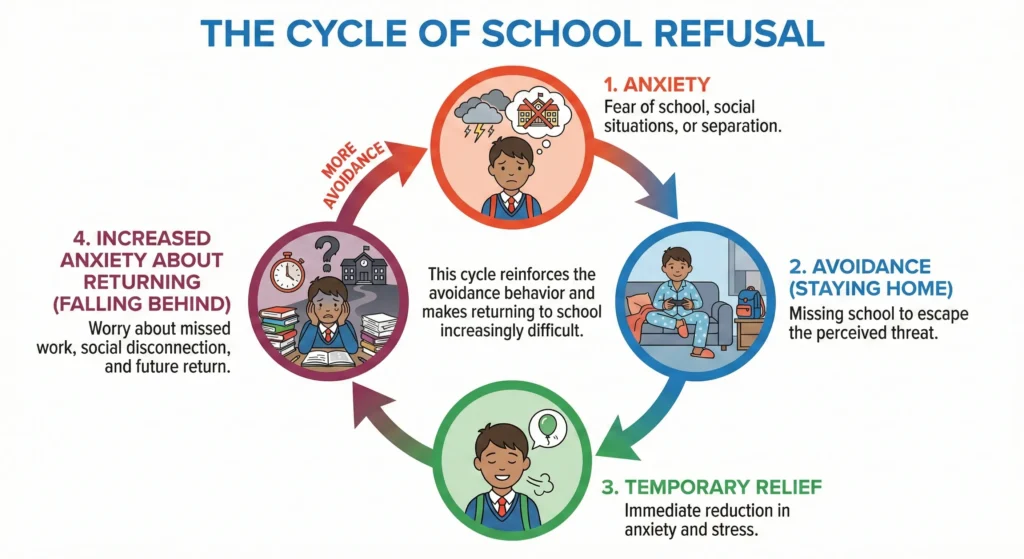
One of the most common reasons parents call us is School Refusal. This is not simply skipping class to have fun. It is a severe anxiety reaction.
- The Scene: It’s 7:00 AM on a Tuesday. Your teen is in bed, refusing to get up. They might be crying, screaming, or complaining of severe stomach pain. You try to force them, and it escalates into a full-blown panic attack or rage episode.
- The Cause: The brain perceives the school building as a threat (like a burning building). The refusal is a “Flight” response.
- The Mistake: Punishing them or taking away their phone usually backfires because it increases the stress without addressing the fear.
Clinical Tip: School refusal is often a symptom of Agoraphobia or Social Anxiety Disorder. It requires exposure therapy, not punishment.
The Legal Side: 504 Plans and IEPs
If your teen had a broken leg, the school would give them extra time to get to class. If your teen has a broken spirit (Depression/Anxiety), they deserve accommodations too.
Many parents do not know their rights under the Americans with Disabilities Act (ADA).
1. The 504 Plan
This is a legal document that ensures a student with a disability (including mental health) receives accommodations to access the learning environment.
- Common Accommodations:
- Extended time on tests.
- Permission to leave the classroom to go to the nurse/counselor if having a panic attack (“Cool Down Pass”).
- Preferential seating (near the door for anxiety).
- Reduced homework load during medication changes.
- Extended time on tests.
- Permission to leave the classroom to go to the nurse/counselor if having a panic attack (“Cool Down Pass”).
- Preferential seating (near the door for anxiety).
- Reduced homework load during medication changes.
2. The IEP (Individualized Education Program)
This is more robust than a 504. It is for students whose disability affects their ability to learn the curriculum, requiring specialized instruction.
- Best For: Teens with severe ADHD, Autism Spectrum Disorder, or learning disabilities alongside mental health issues.
How to Get One: Do not wait for the school to offer. Send an email to the principal and guidance counselor saying: “I am formally requesting an evaluation for a Section 504 Plan [or IEP] for my child due to a medical diagnosis of [Anxiety/Depression] that is impacting their major life activities.”
The Digital Hallway: Bullying 2.0
In the past, if you were bullied, you were safe once you got home. Now, the bully is in your pocket.
Cyberbullying is relentless. A rumor spread on Snapchat at 10 AM is known by the entire school by lunch. A humiliating photo can live forever.
- The “Finsta” Factor: Teens often have private accounts where they vent. If they are being bullied, they might not tell you, but they might post about wanting to die on their Finsta.
- The Exclusion: Seeing photos of a party they weren’t invited to (posted in real-time) activates the same pain centers in the brain as physical injury.
Parent Action: If your teen’s mood crashes every time they look at their phone, it is time for a “Digital Audit.” You need to know what—and who—is in their digital hallway.

Signs of "Academic Burnout"
Burnout isn’t just for executives. Teens burn out faster because their brains are still developing.
Red Flags:
- Apathy: “I don’t care anymore.” A drop in grades from a student who used to care deeply.
- Physical Illness: Frequent headaches, migraines, or getting sick (colds/flu) constantly due to suppressed immune system from stress.
- Cynicism: A negative, bitter attitude toward teachers, peers, and the future.
- Sleep Revenge: Staying up until 3 AM on the phone because it’s the only time they have “control” over their life.
Treatment Options: You Don't Have to Drop Out
When a teen is in crisis, parents often panic: “If they go to rehab, they’ll fail the year!”
Health comes first. You cannot get a degree if you do not survive high school. However, modern treatment programs are designed to integrate with education.
1. Partial Hospitalization (PHP) with Academics
- The Structure: Therapy from 9 AM to 3 PM.
- The School Component: Most reputable teen PHPs (like ours) have a dedicated “Academic Hour” or an education liaison who coordinates with your teen’s school to keep them on track with assignments so they don’t fall behind.
2. Intensive Outpatient (IOP)
- The Structure: Therapy after school (e.g., 4 PM to 7 PM).
- The Benefit: Your teen stays in school during the day but gets high-level support at night. This is ideal for teens who are struggling but functioning.
3. Therapeutic Boarding Schools / Residential
- The Structure: Living at the facility.
- The Benefit: For teens who need to be removed from a toxic school environment entirely to heal. These programs have full accredited schools built-in.

Conclusion: Redefining "Success"
We need to rewrite the definition of success for our children. Success is not an Ivy League acceptance letter. Success is a child who likes themselves. Success is a child who knows how to handle stress without breaking.
If the price of the A+ is your child’s mental health, the price is too high.
You have the power to intervene. You have the power to say to the school, “My child’s health is the priority.” You have the power to tell your teen, “I love you if you fail, and I love you if you succeed.”
If you need help navigating the school system or finding the right level of care, contact Teen Mental Health Facility today.
Frequently Asked Questions
Can the school kick my child out for mental health issues? Public schools cannot deny education due to disability (mental health falls under this). However, private schools have different rules. If your child is in a private school, check the contract.
Will a 504 Plan look bad on college applications? No. Colleges generally do not know if a student had a 504 or IEP unless the student chooses to disclose it. It does not go on the transcript.
What if my teen refuses to go to school? This is a crisis. Do not force them physically. Call a professional. We can assess if they need a higher level of care (PHP) to stabilize before returning to the classroom.
Is it better to switch schools? Sometimes. If the environment is toxic (bullying) or the academic pressure is a mismatch for your child’s needs, a fresh start can be healing. But “geographical cures” don’t work if the underlying anxiety isn’t treated first.