


Beyond the Screen: Activities for Teens to Improve Their Mental Health
Medical Disclaimer: The content provided in this article is for informational purposes only and does not constitute medical advice. While lifestyle changes and activities can significantly improve mental well-being, they are not a substitute for professional treatment. If your teen is experiencing severe depression, anxiety, or suicidal thoughts, please call 988 or go to the nearest emergency room immediately. For confidential assessment and admissions, contact Teen Mental Health Facility.
Introduction: The "Boredom" Crisis
If you suggest an activity to a modern teenager—going for a walk, painting, or volunteering—you will likely be met with one word: “Boring.”
This isn’t because the activity is actually boring. It is because their brains have been hyper-stimulated by the rapid-fire dopamine hits of TikTok, Snapchat, and video games. Compared to the digital world, the real world feels slow.
But “slow” is exactly what their mental health needs.
In 2026, the antidote to teen anxiety and depression isn’t just therapy; it is engagement. It is reconnecting with the physical world, with their bodies, and with other human beings.
At Teen Mental Health Facility, we integrate experiential activities into our clinical programs because we know that healing happens in motion. In this guide, we will explore evidence-based activities that can help your teen regulate their nervous system, build confidence, and find joy offline.
If you are looking for a program that goes beyond talk therapy, explore our Experiential Teen Treatment Programs.
!

The Science of "Flow State"
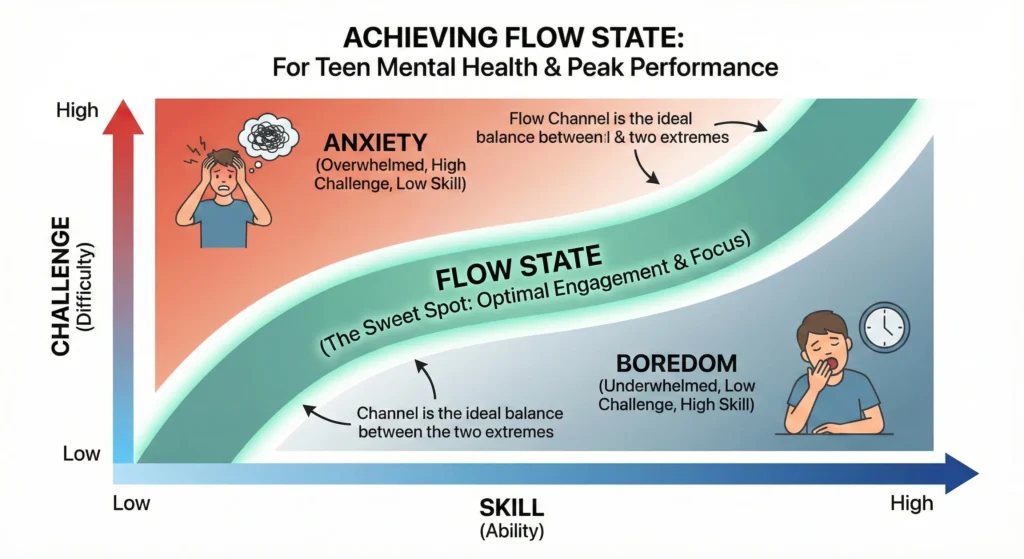
Why do activities help? It comes down to Flow State. This is the mental state where a person is fully immersed in a feeling of energized focus. When a teen is in “flow” (drawing, skating, playing guitar), the brain quiets down. The “Default Mode Network” (the part of the brain that ruminates on “I’m not good enough”) goes offline.
The Goal: To help your teen find an activity that induces Flow, giving their anxious brain a much-needed break.
The "Dopamine Detox" Protocol: Resetting the Reward System
Before introducing new activities, you often have to clear the digital noise. The teen brain is addicted to the “cheap dopamine” of likes and swipes. Real-world activities (which provide “slow dopamine”) cannot compete until the baseline is reset.
The 24-Hour Reset Strategy: We recommend a supervised 24-hour “Unplugged Day.”
- The Rule: No screens. No phones, gaming, or smartwatches.
- The Reaction: Expect withdrawal. Your teen will be irritable, bored, and anxious for the first 4-6 hours. This is normal.
- The Breakthrough: By hour 12, the boredom forces the brain to seek stimulation elsewhere. This is the moment they might actually pick up a guitar, a book, or a conversation.
Parent Tip: You must do it too. You cannot lead a detox from your phone. Make it a family challenge.
1. Creative Expression: Getting It Out
Teens often lack the vocabulary to say, “I feel overwhelmed by existential dread.” Art gives them a language.
Music Therapy (Listening & Creating):
- The Science: Playing an instrument engages every part of the brain at once. It improves executive function and emotional regulation. Even curating a “Mood Playlist” can be a form of emotional processing.
- Activity: Encourage them to learn an instrument (guitar/drums) or use digital production software (GarageBand) to create beats.
Journaling & Creative Writing:
- The Science: Writing about stressful events helps the brain process them, reducing the emotional charge.
- Activity: “Stream of Consciousness” journaling for 10 minutes every morning. The rule is they cannot stop writing, and no one (including you) will ever read it.
Art & Tactile Creation:
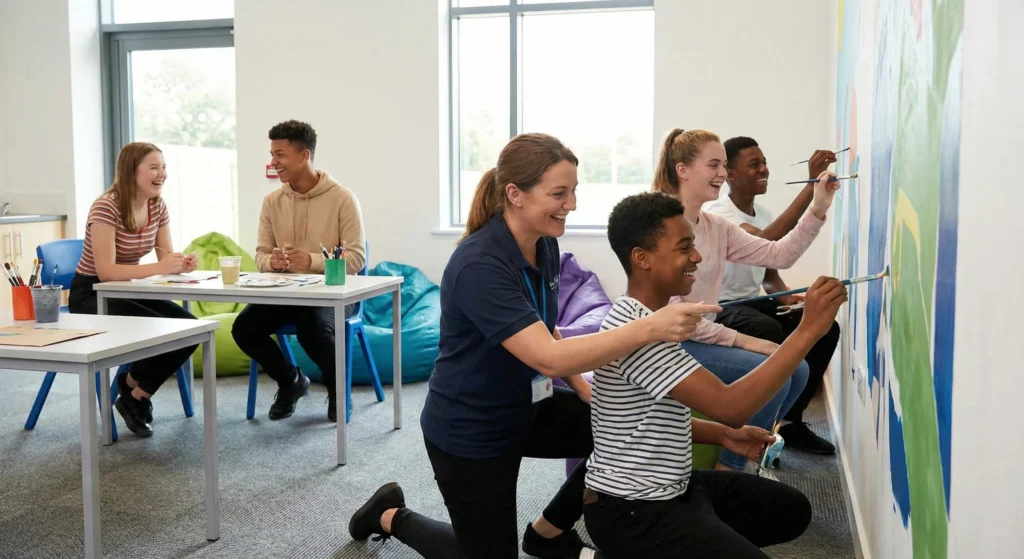
- Activity: Pottery, knitting, or painting. Working with hands is grounding. It forces the brain to focus on the physical sensation of the clay or brush, pulling them out of the “thought spiral.”
2. Physical Movement: The Natural Antidepressant
We often frame exercise as “fitness” or “weight loss,” which can trigger body image issues. We need to reframe it as Mental Hygiene.
Non-Competitive Movement: Many teens hate sports because of the pressure to perform.
- Activity: Yoga, hiking, rock climbing, or skateboarding. These are individual pursuits where the goal is personal progress, not beating an opponent.
- The Benefit: Rock climbing, specifically, requires intense focus (survival instinct), which completely clears the mind of anxiety.
“Green Exercise”:
- Activity: Walking in nature.
- The Science: Research shows that 20 minutes in a park lowers cortisol levels significantly more than 20 minutes walking on a city street.
3. Service & Volunteering: The Perspective Shift
Depression is a disease of self-focus. It traps the teen inside their own head, obsessing over their flaws and pain. Service breaks the loop.
- Activity: Walking dogs at an animal shelter, packing food at a food bank, or tutoring younger kids.
- The Benefit: It builds Self-Efficacy. The teen realizes, “I have value. I can make a difference.” It provides a hit of dopamine and oxytocin (connection) that is sustainable.
4. Animal-Assisted Activities: Healing with Horsepower
Animals offer something humans often cannot: Unconditional Acceptance. For teens with social anxiety or trauma, animals provide a safe way to practice connection without the fear of judgment.
Equine Therapy (Horse Therapy): This is a cornerstone of our program at Teen Mental Health Facility.
- The Science: Horses are prey animals with massive electromagnetic fields. They are hyper-sensitive to human heart rates.
- The Lesson: To lead a horse, a teen must regulate their own nervous system. If the teen is anxious or aggressive, the horse retreats. If the teen breathes deeply and grounds themselves, the horse connects. This provides immediate, non-verbal biofeedback on their emotional state.
Simple Pet Therapy: Even walking a neighbor’s dog or volunteering at a cat sanctuary releases Oxytocin, the bonding hormone that counteracts cortisol.
5. The "Tech-Free" Hobby: Building Mastery
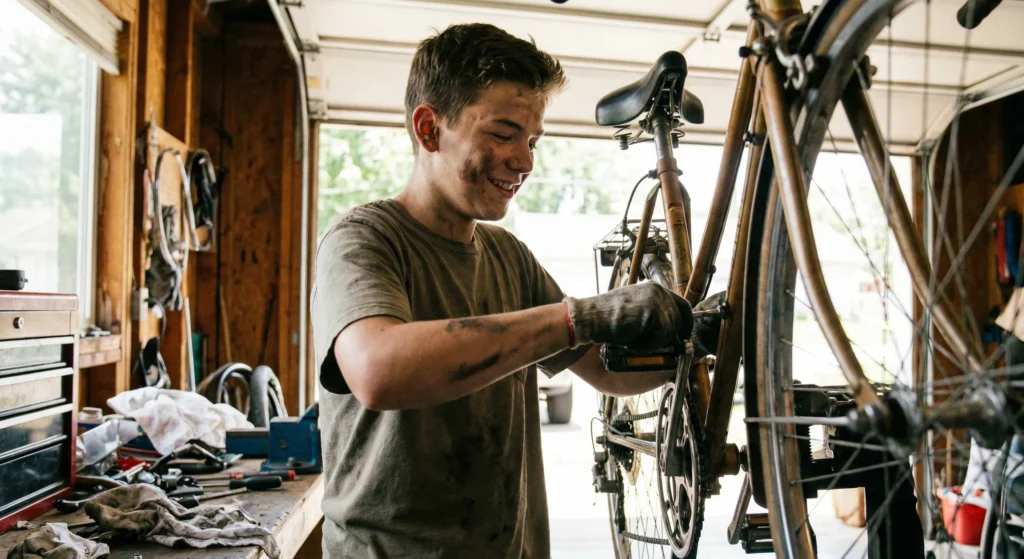
In a digital world, we rarely make things; we just consume them. Building a tangible skill builds Confidence.
- Cooking/Baking: It is sensory (smell, touch, taste) and has a clear beginning, middle, and end (a finished meal). It nurtures the self and others.
- Gardening: Caring for a living thing teaches patience and resilience. Watching a plant grow provides a visual representation of progress.
- Coding/Robotics: For the tech-savvy teen, learning to build the tech rather than just use it shifts them from passive consumer to active creator.
6. Mindfulness for Skeptics: "Brain Training"
If you tell a teen to “meditate,” they will likely roll their eyes. It feels abstract and “woo-woo.” We reframe mindfulness as Performance Enhancement or Brain Training—techniques used by Navy SEALs and pro athletes.
Box Breathing:
- Inhale for 4 seconds. Hold for 4. Exhale for 4. Hold for 4.
- The Hook: Tell them, “This is the hack used by snipers to lower their heart rate instantly.” It gives them a tool to control their own physiology.
The “5 Senses” Drill: When a panic attack hits, identify: 5 things you see, 4 you feel, 3 you hear, 2 you smell, 1 you taste.
- The Benefit: It forces the Prefrontal Cortex to come back online, interrupting the panic loop.
Social Connection vs. Social Media: The Biological Difference
Teens often argue, “I AM social! I talk to my friends on Discord all day.” We need to educate them on the biological difference.
- Digital Connection: Releases short bursts of Dopamine (excitement/anticipation). It is addictive but shallow.
- In-Person Connection: Releases Oxytocin (warmth/safety) and Serotonin (satisfaction). This only happens through eye contact, physical touch (a high five, a hug), and shared physical space.
The Activity: Host a “Retro Game Night” or a bonfire. The rule is phones in a basket. Watch how the energy shifts from frantic scrolling to genuine laughter.
How to Get Them Started (The "Buy-In")
The biggest hurdle is the initial resistance.
- Don’t force it: “You have to go hiking” will result in a sulking teen.
- Do it with them (at first): “I really want to try this pottery class, but I don’t want to go alone. Will you come with me?”
- Focus on the feeling: After the activity, ask: “How does your brain feel right now?” Help them connect the dots between the activity and the relief.
When Activities Aren't Enough
If your teen has zero interest in anything (Anhedonia), or if they are too anxious to leave the house, this is a sign that they need clinical support to get started.
Our Teen Mental Health Facility programs use Recreational Therapy to bridge this gap. We facilitate these activities in a safe, therapeutic environment, helping them rediscover joy.
Conclusion: Connection is the Cure
The opposite of addiction and depression is not just sobriety or happiness; it is Connection. Connection to the self, to others, and to the world.
By encouraging your teen to engage in these activities, you are giving them the tools to build a life they don’t want to escape from. You are teaching them that they have the power to change their own brain chemistry.
If you need help building that foundation, contact Teen Mental Health Facility today.
Frequently Asked Questions
What if my teen refuses to leave their room? This is a sign of severe withdrawal. Start small. Bring the activity to them (e.g., “I’m going to paint at the kitchen table, you’re welcome to join”). If they are completely non-functional, professional intervention (IOP/PHP) is likely needed.
Is video gaming a hobby? It can be, but it often fuels dopamine dysregulation. We encourage “active” gaming (creating mods, coding) over “passive” gaming, and setting strict boundaries to ensure it doesn’t replace real-world connection.
How do I find volunteer opportunities? Websites like VolunteerMatch.org allow you to filter by age and interest. Look for low-pressure environments (like animal shelters) for anxious teens.
Can these activities replace medication? For mild anxiety/depression, sometimes yes. For moderate to severe cases, activities are an adjunct to medication and therapy, not a replacement.