
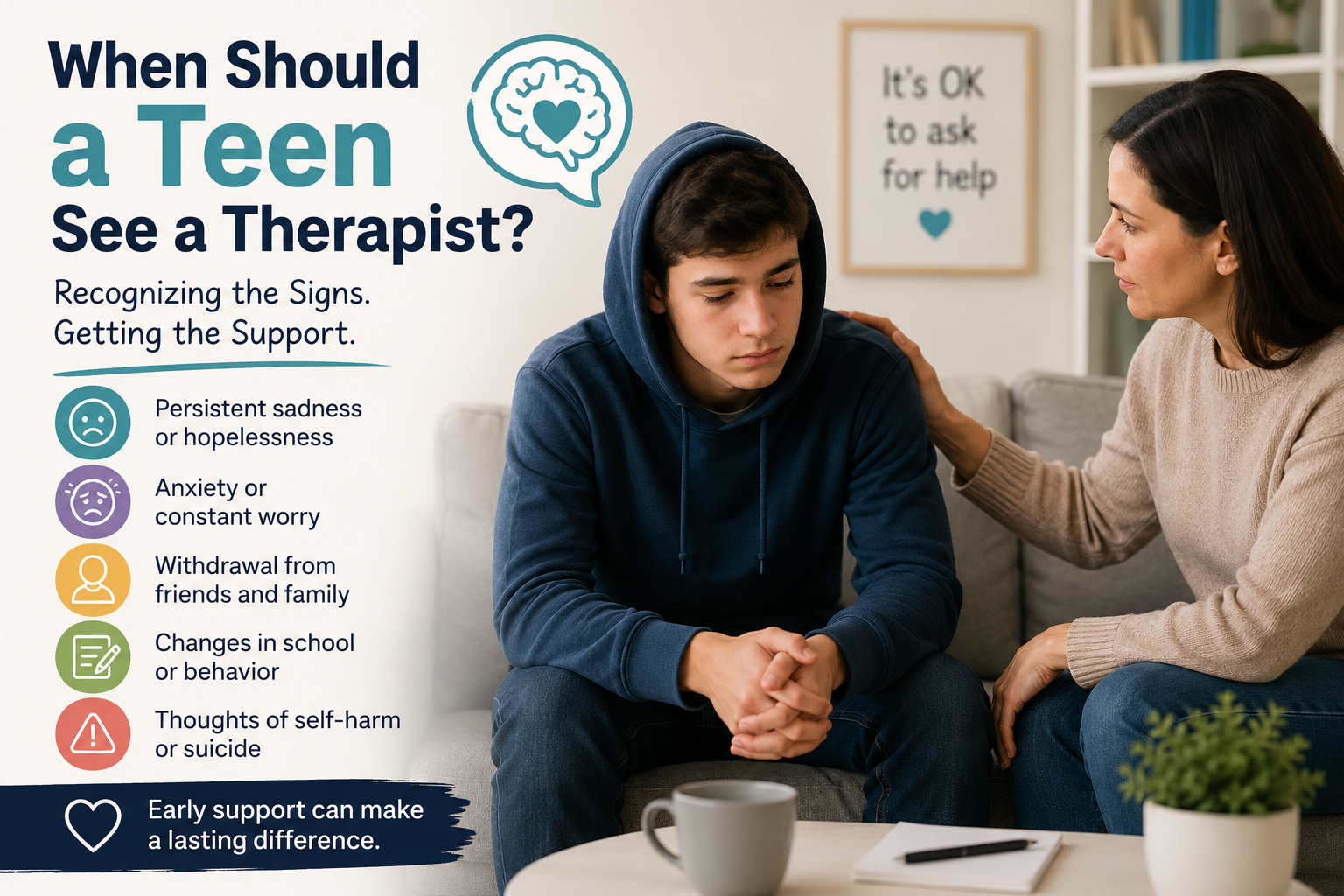

Parents often wonder, “When should a teen see a therapist?” A teen may need professional support when changes in mood, behavior, sleep, school, or relationships last for several weeks or affect daily life. Learning about teen mental health support can help families understand what is normal and what may require more care.
Therapy is not only for a serious mental health crisis. A therapist can help a teenager manage stress, understand emotions, build coping skills, and talk about problems in a safe place.
When Should a Teen See a Therapist?
A teen should see a therapist when emotional or behavioral problems begin to affect life at home, school, or with friends. Parents should also consider therapy when a teen seems stuck, overwhelmed, or unable to cope in healthy ways.
Normal teen development can include mood changes, a need for privacy, and some conflict with parents. However, strong or lasting changes may point to a deeper concern.
The National Institute of Mental Health advises parents to seek help when concerning behaviors last for weeks, cause distress, or interfere with school, home life, or friendships. An evaluation can help identify what the teen is experiencing and what type of support may help.
A teen may benefit from therapy if they:
Seem sad, worried, angry, or hopeless most days
Pull away from family and friends
Stop enjoying favorite activities
Struggle to sleep or sleep much more than usual
Have a sudden drop in grades
Miss school often
Have frequent emotional outbursts
Use alcohol or drugs to cope
Talk about death, self-harm, or feeling worthless
Have trouble recovering after a painful event
Parents do not need to wait until symptoms become severe. Early support can make it easier to understand and manage mental health concerns.
What Are the Main Signs a Teen Needs Therapy?
There is no single sign that proves a teenager needs counseling. Parents should look for patterns, sudden changes, and problems that do not improve with support at home.
Lasting Sadness or Hopelessness
Every teenager feels sad at times. Sadness may follow an argument, a poor grade, a breakup, or a hard day. It becomes more concerning when it lasts for weeks or affects many parts of life.
A teen who may be dealing with depression could:
Cry often
Say nothing will get better
Feel empty or worthless
Lose interest in hobbies
Have very little energy
Struggle to get out of bed
Stop caring about school or plans
Depression is more than feeling unhappy for a day or two. A mental health professional can assess the teen’s symptoms and recommend an appropriate treatment plan.
Strong Anxiety or Constant Worry
Some stress is normal during the teen years. Tests, sports, friendships, family issues, and plans for the future can all cause worry.
Therapy may be helpful when anxiety causes a teen to avoid school, social events, driving, eating, sleeping, or other daily tasks.
Signs of anxiety in teenagers may include:
Constant worry
Panic attacks
Racing thoughts
Headaches or stomach pain
Trouble sleeping
Fear of making mistakes
Needing frequent reassurance
Avoiding people or places
Feeling tense or restless
The CDC notes that the first step for possible anxiety or depression is often speaking with a health care provider or mental health specialist about an evaluation.
Withdrawal From Family and Friends
Teenagers often want more independence. Spending more time alone does not always mean something is wrong.
However, sudden or extreme social withdrawal can be a warning sign. A teen may stop answering friends, avoid family meals, stay in their room all day, or quit clubs and sports.
Isolation can be connected to:
Depression
Social anxiety
Bullying
Low self-esteem
Trauma
Grief
Family conflict
Problems with friends
Substance use
A therapist can give the teen a private place to explain what is happening without feeling judged.
Sudden Changes in School Performance
A poor grade does not always point to a mental health disorder. Still, a major change in attendance, focus, effort, or behavior may mean a teen is struggling.
Warning signs can include:
Falling grades
Skipping classes
Refusing to attend school
Sleeping during class
Missing assignments
Getting into fights
Losing interest in future goals
Frequent visits to the school nurse
Parents can speak with teachers, counselors, or the teen’s doctor to better understand the change. Information from school may also be part of a full mental health evaluation.
Changes in Sleep or Eating
Mental health problems can affect the body as well as the mind. Changes in sleep and eating habits may be important clues.
A teen may:
Stay awake most of the night
Sleep throughout the day
Have frequent nightmares
Eat much more or less than usual
Hide food
Skip meals
Become very focused on weight
Exercise in an extreme way
These changes can be linked to stress, depression, anxiety, trauma, or an eating disorder. A doctor can also check for health conditions that may cause similar symptoms.
Anger, Aggression, or Risky Behavior
Teenagers may have strong feelings as they learn to handle stress and independence. But repeated rage, aggression, or dangerous behavior deserves attention.
A teen may need professional help if they:
Break things during arguments
Threaten family members
Start physical fights
Run away
Drive dangerously
Steal
Have unsafe sexual contact
Use drugs or alcohol
Ignore serious rules
Seem unable to control impulses
These behaviors do not make a teen “bad.” They may show that the teen lacks safe ways to handle fear, pain, anger, or pressure.
Should a Teen See a Therapist After Trauma?
A teenager may benefit from therapy after a frightening, painful, or life-changing event. Trauma can affect thoughts, emotions, sleep, behavior, and feelings of safety.
Possible traumatic events include:
Abuse or neglect
Bullying
Sexual assault
A serious accident
Community violence
The death of a loved one
A natural disaster
A painful medical event
Witnessing violence
A sudden family separation
Not every teen develops post-traumatic stress disorder after trauma. However, support may be needed when fear, nightmares, guilt, avoidance, anger, or unwanted memories continue.
Trauma-focused therapy can help a teenager understand their reactions and feel safe again. Parents should avoid forcing the teen to describe every detail before they are ready.
When Is Teen Mental Health an Emergency?
Some warning signs require immediate action rather than a standard therapy appointment.
Seek urgent help when a teen:
Talks about wanting to die
Has a suicide plan
Attempts suicide
Hurts themselves
Threatens to seriously harm someone
Hears or sees things others do not
Seems disconnected from reality
Cannot eat or drink safely
Has a dangerous reaction to drugs
Is out of control and cannot stay safe
The American Academy of Pediatrics explains that suicidal risk may be connected to depression, isolation, substance use, bullying, family conflict, or past attempts. Not every young person shows the same warning signs, so parents should take statements about death or self-harm seriously.
Do not leave a teen alone when there is an immediate safety risk. Remove access to firearms, medications, sharp objects, alcohol, and other dangerous items. Call emergency services or go to the nearest emergency room when the danger is immediate.
In the United States, families can also call or text 988 for crisis support.
How Can Therapy Help a Teenager?
Teen therapy gives young people a safe setting to talk about thoughts, feelings, relationships, and stressful events. The therapist does not simply tell the teen what to do. The goal is to help the teen understand problems and develop useful skills.
Therapy may help a teenager:
Name and manage emotions
Reduce anxiety
Cope with depression
Improve communication
Build confidence
Process grief or trauma
Solve problems
Set healthy boundaries
Handle peer pressure
Improve family relationships
Replace harmful coping behaviors
Create a safety plan
Early diagnosis and access to mental health services can improve a child’s well-being and ability to function at home, in school, and with peers.
What Types of Therapy Are Used for Teens?
The right form of treatment depends on the teen’s symptoms, age, needs, and family situation.
Individual Therapy
Individual therapy involves private meetings between the teen and a licensed therapist. Sessions may focus on emotions, behavior, coping tools, goals, or difficult events.
Cognitive Behavioral Therapy
Cognitive behavioral therapy, often called CBT, helps teens notice links between thoughts, feelings, and actions. It may be used for anxiety, depression, stress, and other concerns.
Family Therapy
Family therapy includes parents, caregivers, siblings, or other important family members. It can improve communication, reduce conflict, and help the family respond to problems as a team.
Group Therapy
Group therapy allows teens with similar concerns to learn and practice skills together. A trained therapist guides the group and helps create a respectful environment.
Trauma-Focused Therapy
Trauma-focused care helps teens process frightening or painful experiences without blaming them or pushing them too quickly. Treatment may include coping skills, education about trauma, and safe ways to work through memories.
How Do Parents Talk to a Teen About Therapy?
Choose a calm time when no one is rushing or arguing. Speak with care rather than blame.
A parent might say:
“I have noticed that you seem overwhelmed lately. I love you, and I want to help. Talking with a therapist may give you a safe place to work through what is happening.”
Avoid saying:
“You are the problem.”
“You need to be fixed.”
“You are acting crazy.”
“Other kids have it worse.”
“You should be able to handle this.”
Listen to the teen’s concerns. They may worry that therapy means they are weak, in trouble, or being judged. Explain that therapy is a form of health care and that many people use it to learn coping skills.
Supportive relationships with parents, caregivers, friends, schools, and community members can help protect youth mental health.
How Can Parents Find the Right Teen Therapist?
Start by speaking with the teen’s pediatrician, primary care provider, or school counselor. They may recommend licensed professionals who work with adolescents.
Parents can ask a possible therapist:
Are you licensed to provide mental health care?
How much experience do you have with teenagers?
Do you treat my teen’s main concern?
What therapy methods do you use?
How are parents involved?
What information stays private?
How do you handle safety concerns?
How will progress be measured?
A good match matters. Teens may need time to trust a therapist, but they should feel respected, heard, and emotionally safe.
Parents should also ask the therapist to explain confidentiality. In most cases, teens need privacy to speak openly. However, therapists may need to share information when there is a serious risk of harm or when reporting is required by law.
What If a Teen Refuses Therapy?
A teen may refuse counseling because they feel scared, embarrassed, angry, or misunderstood. Avoid turning the first conversation into a fight.
Ask what worries them about therapy. Offer choices when possible, such as choosing between two therapists, meeting online or in person, or attending an introductory session before deciding.
Parents can also:
Explain what therapy is
Let the teen review therapist profiles
Ask the pediatrician to discuss treatment
Consider family therapy
Model healthy help-seeking
Keep conversations calm
Focus on specific problems rather than labels
Do not give up after one refusal. Continue showing care and watching for changes. When there is an immediate safety concern, a teen may need an urgent evaluation even if they do not want to attend.
How Can Revival Mental Health Support Families?
Deciding when a teen should see a therapist can feel confusing. Families do not have to know the exact diagnosis before asking for help.
Revival Mental Health can help families better understand emotional, behavioral, and mental health concerns. A professional evaluation can identify the teen’s needs and guide the next steps in care.
Seeking therapy does not mean a parent has failed. It means the family is taking the teen’s health seriously. Early support can give a young person healthier ways to cope, communicate, and move forward.
Frequently Asked Questions
What age should a teenager start therapy?
There is no single correct age. A teen can start therapy whenever emotional, behavioral, social, or school problems begin affecting daily life. Therapy should be based on the young person’s needs rather than age alone.
Is it normal for a teenager to need therapy?
Yes. Teenagers may attend therapy for stress, anxiety, depression, grief, trauma, family conflict, bullying, or major life changes. Needing support does not mean the teen is weak or has a severe disorder.
How long should teen symptoms last before seeking help?
Parents should consider professional help when symptoms last for several weeks, keep getting worse, or disrupt sleep, school, relationships, eating, or daily tasks. Immediate safety concerns should never wait.
Can a parent attend a teen’s therapy sessions?
Parents may attend some sessions, especially during an evaluation or family therapy. Individual sessions are often private so the teen can speak honestly. The therapist should explain how parent involvement and confidentiality will work.
What should I do if my teen talks about suicide?
Take every statement about suicide or self-harm seriously. Stay with the teen, reduce access to dangerous items, and seek urgent professional help. Call emergency services when there is immediate danger. In the United States, call or text 988 for crisis support.