
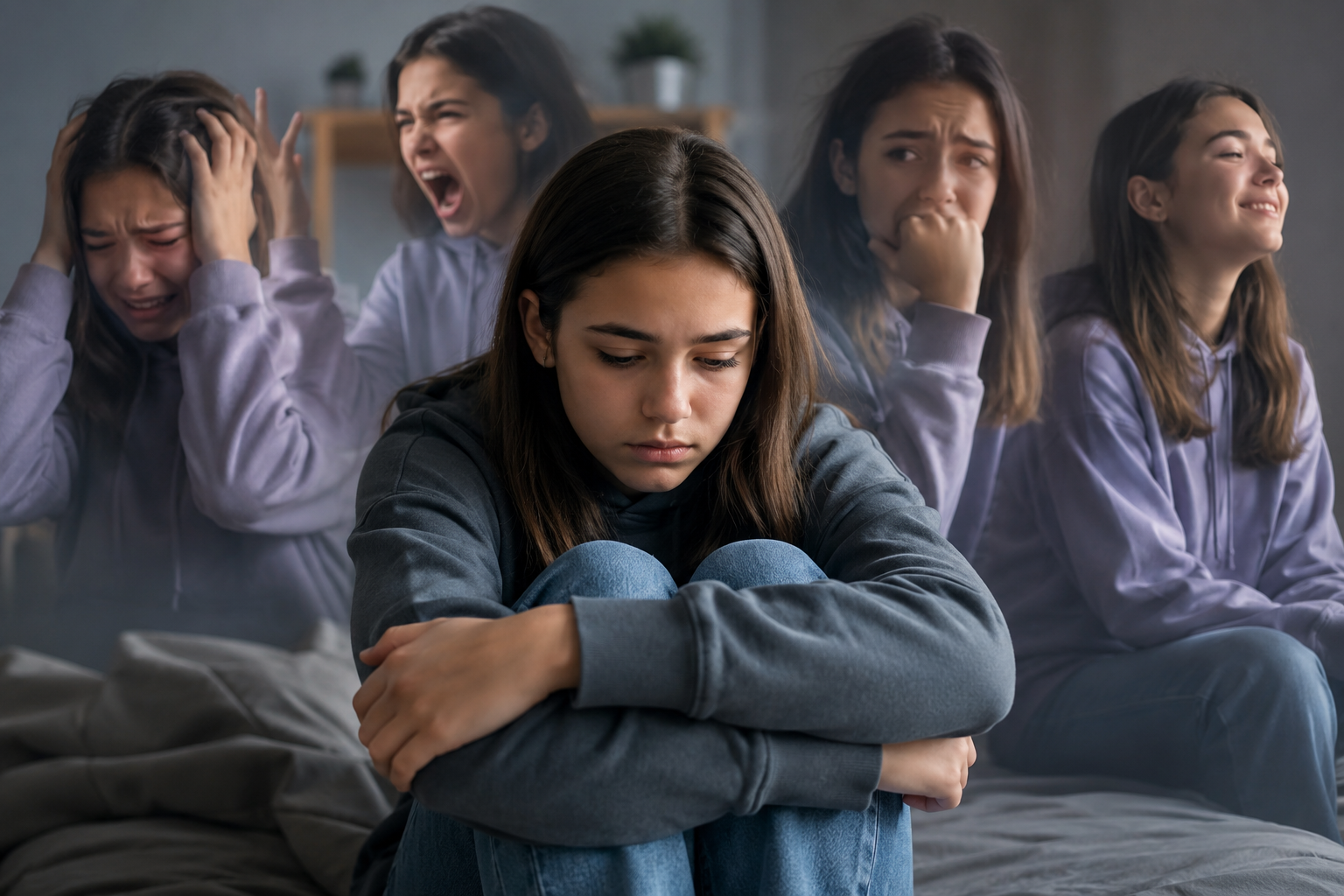

Emotional dysregulation in teens happens when a teenager has a hard time controlling strong emotions. A small problem may cause a very big reaction. Anger, sadness, fear, or frustration may come on fast and take a long time to settle.
While strong emotions can be part of growing up, frequent emotional outbursts may point to a deeper mental health concern. Families looking for teen mental health treatment can learn how emotional health, behavior, trauma, ADHD, and other conditions may affect a teen’s ability to cope.
The good news is that teens can learn healthier ways to understand and manage their emotions.
What Is Emotional Dysregulation in Teens?
Emotional dysregulation means a person has trouble managing the strength, length, or expression of emotions.
A teen may become very angry after a small disagreement. They may cry for hours after getting a bad grade. Another teen may act without thinking when they feel rejected or upset.
The emotion itself is not always the problem. Everyone feels angry, sad, worried, or frustrated. The concern is how strongly the teen reacts and how difficult it is for them to recover.
Emotional dysregulation is not always a diagnosis by itself. It can appear along with several mental health and developmental conditions. Current child psychiatry education describes emotional dysregulation as something that can occur across ADHD, anxiety disorders, trauma-related conditions, autism spectrum disorder, and other psychiatric concerns.
Common Signs of Emotional Dysregulation in Teens
Signs can look different from one teenager to another.
Intense Emotional Reactions
A teen may respond to a small event as if something terrible has happened.
Examples may include:
- Yelling after being asked to complete a chore
- Crying after receiving mild criticism
- Becoming extremely upset when plans change
- Slamming doors or throwing objects
- Feeling rejected after a small disagreement
- Becoming overwhelmed by normal school stress
Parents may feel like they have to carefully choose every word because they do not know what will cause the next emotional reaction.
Taking a Long Time to Calm Down
Most people become upset sometimes. A major sign of emotional dysregulation is difficulty returning to a calm state.
One teenager may calm down after five or ten minutes. A teen struggling with emotional regulation may stay angry, anxious, or upset for hours.
They may keep thinking about what happened even after the problem has been solved.
This is sometimes called slow emotional recovery.
Impulsive Behavior
Strong emotions can make it harder to stop and think before acting.
A teen might:
- Send an angry text
- Break something
- Run away from an argument
- Skip school
- Drive dangerously
- Use alcohol or drugs
- Hurt themselves
- Say things they later regret
Impulsivity is also an important symptom clinicians consider when evaluating ADHD. Health professionals are encouraged to assess adolescents with behavioral or school problems for patterns involving inattention, hyperactivity, or impulsivity.
Frequent Anger or Irritability
Emotional dysregulation does not always look like crying.
For many teens, it appears as anger.
A teenager may seem irritated almost every day. Small frustrations may lead to shouting, arguing, or aggressive behavior.
Parents sometimes describe the teen as going from “0 to 100” very quickly.
The teen may later feel embarrassed or guilty about the reaction.
Trouble Handling Rejection
Some teens are highly sensitive to feeling left out, criticized, or rejected.
A friend not answering a text might feel like the end of the friendship. A teacher correcting an assignment may feel like a personal attack.
The teen may understand later that the reaction was too strong. However, in the moment, the emotion can feel completely real and overwhelming.
What Causes Emotional Dysregulation in Teens?
There is not one cause of emotional dysregulation.
Many factors can affect a teenager’s ability to manage emotions.
Teen Brain Development
The teenage brain is still developing.
Teens are learning how to control impulses, think through consequences, solve problems, and respond to stressful situations.
This means teenagers may sometimes react more strongly than adults.
However, normal teen emotions usually do not constantly damage school performance, relationships, safety, or everyday functioning.
When reactions become severe or happen often, a professional evaluation may be helpful.
ADHD and Emotional Dysregulation
ADHD can affect much more than attention.
Teens with ADHD may struggle with impulsivity, frustration, patience, and stopping themselves before responding.
A teenager may understand what they should do but have trouble slowing down when they become upset.
ADHD can also occur with anxiety, depression, behavioral disorders, learning problems, and sleep conditions. Because symptoms can overlap, a full professional assessment is important rather than assuming every emotional problem is caused by ADHD.
Trauma and Stress
Trauma can change the way a teenager responds to stress.
A teen who has experienced violence, abuse, neglect, loss, bullying, or another frightening event may stay alert for danger even when they are currently safe.
Trauma-related reactions in adolescents can include anger, withdrawal, school problems, sleep trouble, trouble concentrating, disruptive behavior, and strong emotional changes.
A teen may seem angry when they are actually scared.
Others may shut down completely instead of having an emotional outburst.
Trauma-informed treatment tries to understand what may be underneath the behavior rather than simply punishing the behavior itself.
Anxiety
Anxiety can also cause emotional dysregulation.
A worried teen may already feel emotionally overloaded. A small additional stressor can then feel impossible to handle.
For example, a teen worried about school may explode when a parent asks about homework.
The anger may look like the main problem even though anxiety is driving the reaction.
Depression
Depression in teens does not always look like sadness.
Some teenagers become irritable, frustrated, angry, tired, or withdrawn.
They may have less patience than usual and struggle with everyday stress.
A mental health professional can help determine whether emotional changes may be connected to depression or another condition.
Lack of Sleep
Sleep can also affect emotional control.
A tired teenager may become frustrated faster and have more trouble thinking clearly.
Parents should look at the full picture, including bedtime habits, school schedules, screen use, anxiety, medications, and possible sleep disorders.
Improving sleep alone may not solve serious emotional dysregulation, but healthy sleep is an important part of overall mental wellness.
Emotional Dysregulation vs Normal Teen Mood Swings
Teen mood swings are common.
Emotional dysregulation tends to be more intense and disruptive.
Normal Teen Emotions May Include
A teenager may:
- Become annoyed with parents
- Want more privacy
- Feel stressed about school
- Become upset after a breakup
- Have occasional arguments
- Feel embarrassed easily
- Experience changing moods
These behaviors may be uncomfortable for parents, but they do not always mean something is wrong.
Emotional Dysregulation May Affect Daily Life
It becomes more concerning when emotions repeatedly interfere with:
- School attendance
- Grades
- Friendships
- Family relationships
- Sleep
- Personal safety
- Decision-making
- Activities the teen normally enjoys
Parents should pay attention to patterns rather than one bad day.
How Emotional Dysregulation Affects School
School places many demands on teenagers.
They must follow rules, complete assignments, manage deadlines, deal with peers, and respond to feedback.
A teen with emotional dysregulation may struggle when something unexpected happens.
They may walk out of class, argue with teachers, refuse assignments, or shut down during stressful situations.
These behaviors can sometimes be mistaken for laziness or disrespect.
A professional evaluation can help determine whether ADHD, anxiety, depression, trauma, learning difficulties, or another issue is contributing to the problem.
How Emotional Dysregulation Affects Families
Emotional dysregulation can affect the entire household.
Parents may begin avoiding certain subjects because they fear an argument.
Siblings may feel nervous around the teen.
Family rules may become inconsistent because adults are trying to prevent another outburst.
Over time, everyone can become exhausted.
Family therapy or parent coaching can help families learn new ways to communicate, set limits, respond to emotional outbursts, and support healthier coping.
How Is Emotional Dysregulation Diagnosed?
There is no single test that tells a parent whether a teen has emotional dysregulation.
A qualified mental health professional may look at:
- How often emotional reactions happen
- What triggers them
- How long they last
- Behavior at home
- Behavior at school
- Sleep patterns
- Medical history
- Trauma history
- Medication use
- Substance use
- Relationships
- ADHD symptoms
- Anxiety or depression symptoms
- Safety concerns
Getting information from both caregivers and school staff can be useful when behavioral or attention problems occur in several settings.
The goal is to understand why the behavior is happening.
Can DBT Help Emotional Dysregulation in Teens?
Dialectical Behavior Therapy, usually called DBT, can be especially helpful for some teens who struggle with intense emotions, impulsive behavior, or self-harm.
Parents can learn more about DBT therapy for teens and how skills-based treatment may support emotional control.
What Does DBT Teach Teens?
DBT often focuses on four major groups of skills.
Mindfulness
Mindfulness helps teens notice what they are feeling without immediately reacting.
They learn to recognize thoughts, emotions, and body sensations.
For example, a teen may learn to notice:
“My heart is beating fast. My hands are tight. I am getting angry.”
Recognizing these warning signs can give them time to use a coping skill.
Distress Tolerance
Distress tolerance teaches teens how to make it through difficult moments without making the situation worse.
The goal is not to pretend the emotion does not exist.
The teen learns how to survive the emotional wave safely.
Emotion Regulation
Emotion regulation skills help teens identify emotions and understand what makes those emotions stronger.
Teens may learn how sleep, hunger, stress, thoughts, relationships, and physical health affect their emotional state.
Interpersonal Effectiveness
These skills help teens communicate more clearly.
They may learn how to ask for what they need, set boundaries, handle conflict, and maintain healthier relationships.
DBT has been adapted for children and adolescents with significant mood dysregulation, including approaches that combine individual therapy, skills training, and parent participation.
Research in adolescents receiving DBT-based treatment has also found improvements in emotion regulation, particularly in youth with serious self-harm concerns.
Other Treatment Options for Emotional Dysregulation
DBT is not the only treatment option.
A treatment plan depends on what is causing the emotional problems.
Individual Therapy
Individual therapy gives teens a private space to understand emotions, thoughts, relationships, and behavior.
The therapist may help the teen identify triggers and practice healthier responses.
Cognitive Behavioral Therapy
Cognitive Behavioral Therapy, or CBT, helps teens understand how thoughts affect emotions and behavior.
A teen may learn to identify thoughts such as:
“Everyone hates me.”
“I’m going to fail.”
“Nothing will ever get better.”
The therapist can help the teen examine whether those thoughts are accurate and develop healthier ways of thinking.
Trauma-Informed Therapy
When trauma is involved, treatment should consider how past experiences affect current emotions and behavior.
The goal is not to force a teen to talk about painful experiences before they are ready.
A supportive environment, predictable routines, and trusted adults can help young people recover after traumatic events.
Family Therapy
Parents are an important part of treatment.
Family therapy can teach families how to communicate without increasing conflict.
Parents may also learn when to give their teen space and when firm limits are needed.
Medication
There is not one medication specifically used for every case of emotional dysregulation.
Medication may sometimes be used when a teen has an underlying condition such as ADHD, anxiety, depression, or another psychiatric disorder.
A qualified medical provider should evaluate symptoms before recommending medication.
How Parents Can Help a Teen Regulate Emotions
Parents cannot control a teenager’s emotions for them.
They can create an environment that makes emotional regulation easier to learn.
Stay Calm During the Outburst
Yelling louder usually does not help an overwhelmed teen calm down.
Use a steady voice.
Keep sentences short.
Avoid trying to solve every problem while the teen is extremely upset.
Important conversations can happen after everyone is calmer.
Name the Emotion
Parents can help teens learn emotional language.
You might say:
“It looks like you’re really frustrated.”
or
“It seems like that hurt you.”
Recognizing an emotion does not mean agreeing with harmful behavior.
A parent can understand why a teen is angry while still saying that breaking things is not acceptable.
Look for Patterns
Track when emotional outbursts happen.
Consider questions such as:
- Did the teen sleep enough?
- Did they eat?
- Was there an argument with a friend?
- Is school especially stressful?
- Did something online happen?
- Is there a certain time of day when problems get worse?
- Was there a medication change?
Patterns can provide helpful information for a therapist or doctor.
Practice Skills When Calm
Do not wait until a major outburst to teach coping skills.
Practice when the teen is calm.
Skills might include slow breathing, taking a short walk, listening to music, writing thoughts down, exercising, or asking for a short break.
Repeated practice can make coping skills easier to use during stressful moments.
When Should Parents Get Professional Help?
Parents do not need to wait until a problem becomes a crisis.
Consider contacting a mental health professional when strong emotional reactions are frequent, getting worse, or affecting daily functioning.
Professional support may be especially important when a teen:
- Cannot control anger
- Frequently destroys property
- Becomes physically aggressive
- Stops attending school
- Uses drugs or alcohol to cope
- Has major sleep changes
- Withdraws from family and friends
- Experiences severe anxiety or depression
- Talks about self-harm
- Hurts themselves
- Talks about suicide
Sudden changes in behavior, strong emotions, school problems, withdrawal, or other persistent symptoms after trauma are also reasons to contact a healthcare provider.
Immediate safety concerns require urgent professional evaluation.
How Revival Mental Health Can Help
Emotional dysregulation in teens can affect school, relationships, family life, and safety. It can also leave teenagers feeling ashamed after reactions they did not know how to control.
Revival Mental Health can help families better understand the behaviors underneath intense emotions.
Treatment may focus on emotional regulation skills, impulsivity, trauma, ADHD, anxiety, depression, communication, family relationships, and healthy coping strategies.
The right treatment plan depends on the individual teen.
The goal is not to stop teens from having emotions. The goal is to help them experience strong emotions without letting those feelings control every decision.
With the right support and repeated practice, teens can learn healthier ways to handle anger, fear, sadness, rejection, and frustration.
FAQs About Emotional Dysregulation in Teens
What does emotional dysregulation look like in a teenager?
Emotional dysregulation may cause extreme anger, crying, impulsive behavior, shutdowns, or intense frustration. The teen may react strongly to small problems and take much longer than expected to calm down.
Is emotional dysregulation normal in teenagers?
Some mood changes are normal during adolescence. Emotional dysregulation becomes more concerning when reactions are very intense, happen often, last a long time, or interfere with school, relationships, family life, or safety.
Is emotional dysregulation a symptom of ADHD?
It can occur in teens with ADHD, especially when impulsivity and frustration are present. However, emotional dysregulation can also happen with anxiety, depression, trauma, autism spectrum disorder, and other conditions. A professional evaluation can help identify the cause.
Can trauma cause emotional dysregulation in teens?
Yes. Trauma can affect how a teen reacts to stress and danger. Teens who have experienced trauma may show anger, withdrawal, concentration problems, sleep problems, emotional numbness, or strong reactions to reminders of what happened.
Does DBT help teens control their emotions?
DBT can help some teens build skills for mindfulness, distress tolerance, emotion regulation, and communication. It is often used when emotional dysregulation happens with impulsivity, severe emotional outbursts, or self-harming behavior. Research supports DBT-based approaches for adolescents with significant emotional and behavioral difficulties.