Teen Behavioral Health Treatment Explained: What Parents Need to Know
Medical Disclaimer: The content provided in this article is for informational purposes only and does not constitute medical or psychiatric advice. Severe behavioral health issues can escalate into life-threatening emergencies, including self-harm, overdose, or violence. If your teen is experiencing an acute crisis, active suicidal ideation, or poses an immediate threat to themselves or others, please call 988 or go to the nearest emergency room immediately. For confidential guidance on clinical care and admissions, contact Teen Mental Health Facility.
Introduction: The Shock of the "New Normal"
Parenting is a journey of constant adjustment, but few transitions are as jarring as the sudden behavioral shifts of adolescence.
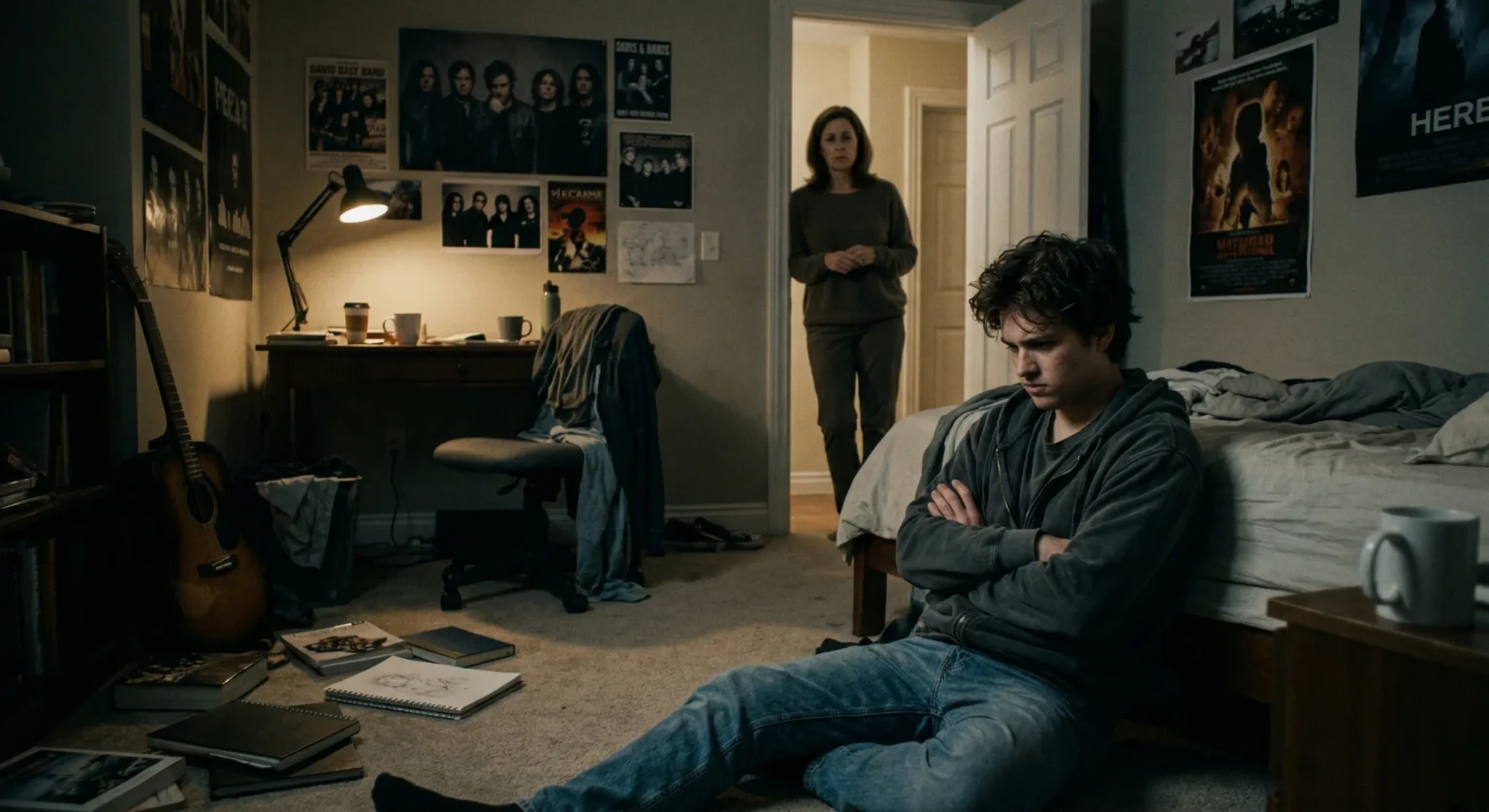
You might remember a child who was sweet, communicative, and eager to please. Now, you find yourself living with a teenager who feels like a stranger. They might be slamming doors, engaging in screaming matches over minor requests, skipping school, or sneaking out at night. You might be finding vape pens in their laundry or discovering that they are hanging out with a completely new, high-risk group of friends.
As a parent, your first instinct is often discipline. You ground them. You take away the smartphone. You revoke car privileges. But instead of improving, the behavior gets worse. The defiance hardens into rage, or the withdrawal deepens into total isolation.
You ask yourself: “Where did I go wrong? Is my child just a ‘bad kid’?”
We want to stop you right there: There is no such thing as a “bad kid.” There are only kids in profound, unmanageable pain.
In the clinical world, we understand that behavior is never random; behavior is communication. When a teenager lacks the emotional vocabulary to articulate complex trauma, severe anxiety, or crushing depression, their actions do the talking for them.
Navigating the world of Teen Behavioral Health Treatment can feel like learning a foreign language while your house is on fire. At Teen Mental Health Facility, we believe that educated parents are empowered parents. In this comprehensive guide, we will decode the clinical terminology of behavioral health, explain the neuroscience behind your teen’s explosive actions, and provide a clear roadmap for finding evidence-based, compassionate care that actually heals the root of the problem.
If you are exhausted from the daily battles and ready to find a real solution, explore our Teen Treatment Programs at Teen Mental Health Facility.
Section 1: Mental Health vs. Behavioral Health — What’s the Difference?
When searching for help, parents often see the terms “Mental Health” and “Behavioral Health” used interchangeably. While they are deeply connected, understanding the distinction can help you advocate for your child more effectively.
Mental Health (The Internal Experience)
Mental health refers primarily to a person’s psychological, emotional, and cognitive state. It is the internal weather system. Diagnoses like Generalized Anxiety Disorder, Major Depressive Disorder, or Bipolar Disorder are mental health conditions. It is how your teen thinks and feels.
Behavioral Health (The External Action)
Behavioral health is the umbrella term that encompasses how a person’s daily habits, actions, and coping mechanisms impact their overall well-being. It is the external manifestation of their internal state. Behavioral health issues arise when a teen uses destructive actions to manage their internal pain. Examples include:
- Substance Use Disorders: Using drugs or alcohol to numb anxiety or trauma.
- Self-Harm (NSSI): Cutting or burning as a maladaptive way to regulate intense emotional pressure.
- Eating Disorders: Using food restriction or bingeing to exert control over a chaotic internal environment.
- Oppositional Defiant Disorder (ODD) or Conduct Issues: Using rage, manipulation, or rule-breaking to push people away before they can be rejected.
The Clinical Reality: You cannot treat the behavior without treating the mind. If you force a teen to stop smoking marijuana but do not treat the social anxiety they were using the marijuana to survive, they will simply find a new, potentially more dangerous behavior to cope with the pain. High-quality treatment must be integrated.
Section 2: The Teenage Brain: An Engine Without Brakes
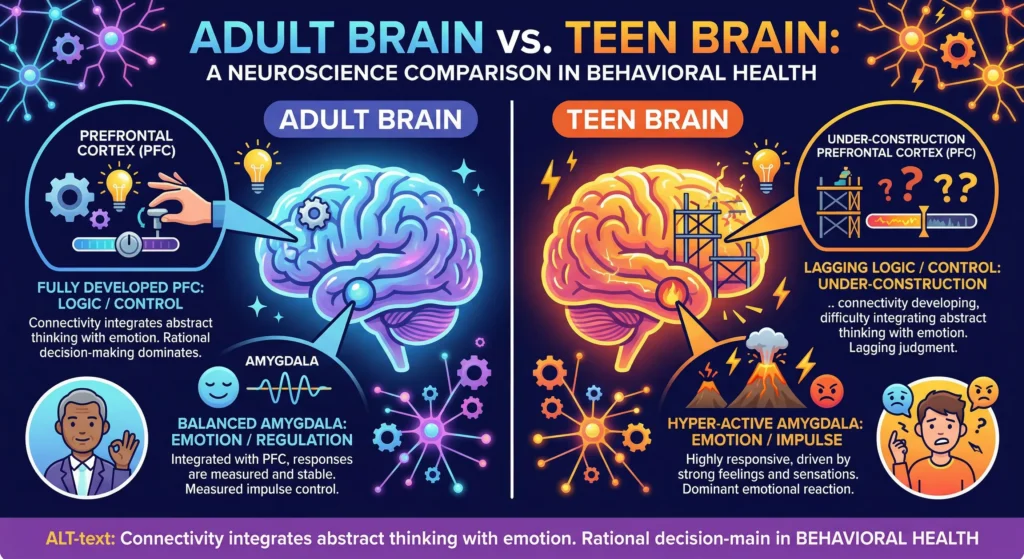
To truly understand why your teenager is acting out, you have to look under the hood of their biology. Adolescence is a period of massive neurological reconstruction, unmatched by any other phase of life except infancy.
According to the National Institute of Mental Health (NIMH), the adolescent brain is characterized by a dangerous mismatch in developmental timelines.
The Amygdala (The Accelerator)
The amygdala is the primitive part of the brain responsible for processing immediate emotions, threat detection, and the “Fight, Flight, or Freeze” response. In teenagers, the amygdala is fully developed and hyper-reactive. This means they experience emotions at 110% intensity. A perceived social slight isn’t just sad; it is biologically interpreted as a life-or-death emergency.
The Prefrontal Cortex (The Brakes)
The prefrontal cortex is the “CEO” of the brain. It is responsible for logic, long-term planning, impulse control, and understanding consequences. This part of the brain does not finish developing until age 25.
The Behavioral Result: Your teenager has the emotional engine of a Ferrari but the brake pads of a bicycle. When they are overwhelmed by trauma or stress, they literally lack the biological hardware to pause, analyze the consequences, and make a rational choice. They act impulsively because their survival brain is running the show. Effective behavioral health treatment acts as the external “brake pedal” while their own brain finishes growing.
Section 3: Warning Signs — When Rebellion Becomes a Crisis
It is normal for teenagers to push boundaries. A missed curfew, a rolled eye, or a messy room are standard rites of passage as they individuate from their parents.
However, there is a distinct line between normal adolescent rebellion and a behavioral health crisis. If you observe the following red flags, the behavior has escalated into clinical territory:
1. Extreme Isolation and Secretive Behavior
It is normal for teens to want privacy. It is not normal for them to completely withdraw from the family, abandon their lifelong friends, and spend 15 hours a day locked in a dark room. Sudden, intense secrecy is often a shield for substance abuse, eating disorders, or severe digital addiction.
2. Radical Shifts in Baseline Personality
You are looking for a complete departure from who they used to be. The gentle child who suddenly punches walls; the straight-A student who is suddenly failing all their classes and skipping school (truancy); the athlete who suddenly quits the team and expresses total apathy toward their future.
3. Dangerous Impulsivity and Rule-Breaking
This goes beyond sneaking a beer at a party. We are talking about chronic, high-risk behaviors:
- Stealing from family members or shoplifting.
- Getting into physical altercations or bringing weapons to school.
- Running away from home for days at a time.
- Engaging in highly reckless sexual behavior.
4. Somatic Symptoms and Self-Harm
Unexplained physical injuries (cuts, burns, bruises hidden under long sleeves in the summer) are immediate indicators of a behavioral health crisis. Additionally, frequent, unexplained physical illnesses—like severe stomach aches or migraines every morning before school—are often somatic manifestations of severe panic and avoidance behaviors.
Section 4: The Myth of "Tough Love" and Boot Camps
If your teen is engaging in highly destructive or defiant behavior, you might feel desperate enough to consider a “scared straight” program, a wilderness boot camp, or a punitive behavioral modification facility.
We strongly urge you to reconsider.
For decades, the “Troubled Teen Industry” operated on the premise that bad behavior needed to be punished out of a child. These programs used isolation, humiliation, screaming, and physical deprivation to force compliance.
According to the American Academy of Child and Adolescent Psychiatry (AACAP), these punitive models are not only clinically ineffective, but they are also deeply traumatizing.
Why Punishment Fails: If a teenager is acting out because they have a dysregulated nervous system driven by undiagnosed ADHD, severe trauma, or clinical depression, screaming at them or forcing them to hike in the snow does not cure the brain chemistry. It merely teaches them to suppress their symptoms out of terror. The moment they return home and the threat of punishment is removed, the behavior returns—often worse than before, now compounded by the new trauma of the “treatment.”
The Modern Standard: High-quality behavioral health treatment is Trauma-Informed. At Teen Mental Health Facility, we do not punish the symptom; we heal the root. We use empathy, medical science, and structured accountability to help the teen build genuine, internal motivation to change.

Section 5: Evidence-Based Behavioral Therapies
So, if we don’t use punishment, how do we actually change destructive behavior? We use Evidence-Based Practices (EBPs)—therapies that have been rigorously tested and scientifically proven to rewire neural pathways and improve emotional regulation.
At Teen Mental Health Facility, our clinicians utilize a sophisticated toolkit tailored to the adolescent brain:
1. Cognitive Behavioral Therapy (CBT)
CBT is the gold standard for treating anxiety, depression, and mild behavioral issues. It operates on the principle that our thoughts create our feelings, which drive our behaviors.
- The Process: A therapist helps the teen identify their “cognitive distortions” (e.g., “Everyone hates me, so I might as well act like a jerk”). By challenging the lie in the thought, we reduce the emotional pain, which naturally stops the destructive behavior.
2. Dialectical Behavior Therapy (DBT)
DBT was specifically designed for individuals who experience emotions at extreme intensities and engage in dangerous coping mechanisms (like self-harm, suicidal ideation, or explosive rage).
- The Skills: DBT is highly practical. It teaches teens four core modules: Mindfulness (staying present), Distress Tolerance (how to survive a panic attack without cutting or using drugs), Emotion Regulation (how to calm the nervous system), and Interpersonal Effectiveness (how to ask for what you need without screaming).
3. Eye Movement Desensitization and Reprocessing (EMDR)
If a teen’s behavioral outbursts are rooted in trauma (bullying, abuse, grief), talk therapy often isn’t enough. EMDR is a neurological therapy that uses bilateral stimulation (eye movements or tapping) to help the brain finally process and “file away” traumatic memories. It removes the visceral “fight or flight” panic attached to the memory, allowing the teen’s nervous system to finally power down.
4. Motivational Interviewing (MI)
Teens hate being told what to do. MI is a collaborative conversational style where the therapist guides the teen to find their own reasons for wanting to change, rather than lecturing them. It resolves the ambivalence and resistance that is so common in adolescent treatment.
Section 6: Decoding the Levels of Care
Behavioral health treatment is not a one-size-fits-all event. It is a continuum. When you contact a facility, they will conduct a clinical assessment to place your child in the least restrictive environment that is still medically safe.
Here is what the “alphabet soup” of treatment actually means:
Outpatient Therapy (OP)
- The Structure: Seeing a therapist for 1 to 2 hours a week.
- Who it’s for: Teens with mild symptoms who are functioning well at school and home but need a safe space to process stress. (Note: If your teen is in a behavioral crisis, weekly therapy is almost never enough support).
Intensive Outpatient Program (IOP)
- The Structure: Therapy for 3 hours a day, 3 to 4 days a week, typically after school.
- Who it’s for: Teens who are engaging in risky behaviors, substance use, or experiencing moderate depression, but are still able to safely live at home and maintain their academic schedule. It provides a robust clinical community of peers.
- Learn more about how this works on our Intensive Outpatient Program page.
Partial Hospitalization Program (PHP)
- The Structure: Often called “Day Treatment.” The teen attends clinical programming for 5 to 6 hours a day, 5 days a week, replacing their standard school day temporarily.
- Who it’s for: Teens who are experiencing school refusal, severe daily panic attacks, or major behavioral outbursts that make attending a normal high school impossible, but who do not require overnight medical monitoring.
Residential Treatment Center (RTC)
- The Structure: 24/7 live-in medical and psychiatric care for 30 to 90 days.
- Who it’s for: Teens who are an active danger to themselves or others, teens requiring supervised medical detox from substances, or those whose home environment has become too volatile to allow for healing. It provides a complete “factory reset” for the nervous system.

Section 7: The Crucial Role of the Family Ecosystem
Here is a hard truth about adolescent behavioral health: You cannot send a sick teenager away to be “fixed,” and then bring them back to an unchanged environment and expect them to stay well.
When a teenager is in a behavioral crisis, the entire family system becomes sick. Parents become hyper-vigilant, exhausted, and resentful. Siblings feel ignored and anxious. The home turns into a minefield where everyone is walking on eggshells.
If a treatment program isolates the teenager from the parents, it is failing. At Teen Mental Health Facility, Family Therapy is mandatory.
- Parent Coaching: We teach parents how to shift from “Fixing” their teen to “Validating” their emotions. We help you understand the difference between enabling destructive behavior and supporting recovery.
- Boundary Setting: We teach parents how to establish iron-clad, loving boundaries around respect, substance use, and safety, so the home can become a sanctuary again.
- Healing the Trust: Behavioral issues destroy trust between parents and teens. We facilitate mediated sessions to rebuild that bridge, allowing resentments to be cleared safely.
For more resources on how addiction and behavioral health intersect, you can refer to the data provided by the National Institute on Drug Abuse (NIDA).
Conclusion: Do Not Wait for the "Rock Bottom"
The most dangerous myth in behavioral health is that you have to wait for a child to hit “rock bottom”—an arrest, an overdose, or an expulsion—before you can intervene.
Do not wait for the crash.
Intervening early is the ultimate act of parental love. It shows your teenager that you see their pain, you refuse to let them destroy their future, and you will move mountains to get them the help they deserve.
Your vibrant, capable, and loving child is still in there. They are just buried under a heavy blanket of dysregulation, trauma, or chemical imbalance. You don’t have to fight this battle alone anymore. We have the clinical map to guide them out of the dark.
If you are ready to stop the cycle of chaos and find a real solution for your family, contact the compassionate admissions team at Teen Mental Health Facility today for a free, confidential clinical assessment.
Frequently Asked Questions (FAQs)
Will my teen fall behind in school if they go to a PHP or Residential program? No. High-quality programs like ours include dedicated, supervised academic hours to ensure students stay caught up with their coursework. We act as an educational liaison with their home high school to manage their workload and secure necessary accommodations (like 504 plans or IEPs).
What if my teen flat-out refuses to go to treatment? This is incredibly common. The very nature of behavioral health issues makes teens resistant to authority and change. As a parent of a minor, you have the legal right and responsibility to consent to medical treatment for your child. Our clinical admissions team can coach you on how to have a firm, loving, “non-negotiable” conversation to get them through the door safely.
Are group therapy sessions safe? Won’t they just learn bad behaviors from other teens? This is a common fear, but the reality is the opposite. Our clinical groups are heavily moderated by licensed therapists who maintain strict behavioral boundaries. Isolation and shame are the greatest dangers to a teen. When they sit in a room with other peers who are fighting the exact same invisible battles, the shame evaporates, making them far more receptive to clinical guidance.
Does insurance cover behavioral health treatment? Yes. Under the federal Mental Health Parity Act, health insurance companies are required to cover behavioral health, mental health, and substance abuse treatment at the same level they cover physical illnesses. Most major PPO insurance plans cover a significant portion of IOP, PHP, and Residential care. We can verify your specific benefits for free.