
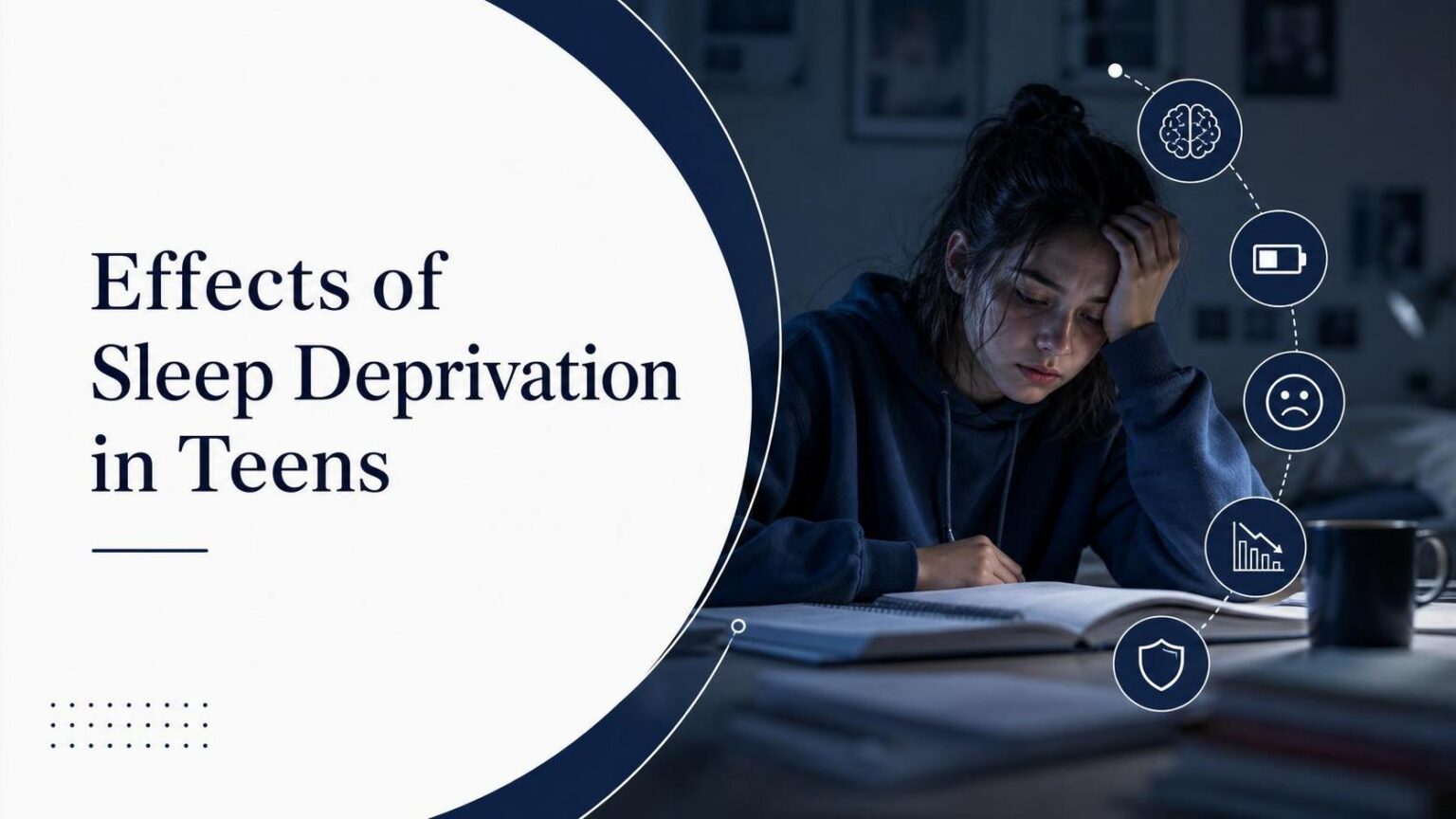

Sleep deprivation in teens is not just a “busy student” problem. It affects mood, learning, safety, health, relationships, and the developing brain during one of the most important growth periods of life.
Many parents notice the same pattern: teenagers struggle to fall asleep, drag themselves out of bed in the morning, then try to catch up later. But when teens sleep too little night after night, the effects can build quickly and quietly.
This guide explains how much sleep teenagers need, why they lose sleep, what happens when they are sleep deprived, and how families can support better sleep without turning every bedtime into a battle.
Why Sleep Deprivation in Teens Is So Common
Searches for sleep deprivation teens have increased because families, teachers, and clinicians are seeing the same issue from different angles. Today’s teens are juggling school, homework, sports, social pressure, electronic devices, and often part time jobs.
According to the Centers for Disease Control and Prevention, many high school students do not get the recommended amount of rest on school nights. Nearly 70% of teenagers do not get the recommended 8–10 hours of nightly sleep, creating a pattern that can affect brain development, emotional regulation, and physical health.
The problem is not simply laziness or poor discipline. The teenage body changes during puberty. Research shows that teens experience a natural sleep-phase delay, a shift in circadian rhythm that makes it difficult for them to fall asleep before 11 p.m.
During puberty, the onset of melatonin secretion is delayed by approximately two hours, causing teens to feel tired around 11 p.m. or later. At the same time, early school schedules often demand that they wake before their bodies are ready.
How Much Sleep Do Teenagers Really Need?
So, how much sleep is enough? The Sleep Foundation and the national sleep foundation commonly point to 8 to 10 hours of sleep per night for this age group.
Teenagers biologically require 8 to 10 hours, yet nearly 70% to 80% fail to meet this minimum. That means more than half of american teens are likely running on insufficient sleep during a typical school week.
When parents ask how much sleep their child should be getting, the answer depends on the teen, but most teens function best near the middle or higher end of that range. A high school student who gets six hours may appear “used to it,” but the body is often compensating rather than thriving.
How much sleep matters because sleep time supports memory consolidation, hormone regulation, immune function, and emotional control. During deep sleep, the brain and body perform restorative work that cannot be replaced by caffeine or weekend oversleeping.
The Biology Behind Late Nights and Morning Struggles
Many adults wonder why teens sleep late whenever they get the chance. One reason is that the adolescent circadian rhythm naturally shifts later, promoting alertness in the evening and sleepiness later at night.
Pioneering sleep research by Mary Carskadon at Brown University in Rhode Island helped show that adolescent biology changes the sleep-wake cycle. Studies indicate that the biological clock of adolescents is naturally inclined to make them more alert in the evening.
This does not mean teenagers should stay awake all night. It means expecting them to fall asleep early after a stimulating evening of homework, messages, and stress may not match their biology.
To successfully counter adolescent sleep deprivation, teenagers must align their habits with their biologically shifted circadian rhythms. That often requires a realistic bedtime, a predictable wake time, and a calmer evening routine.
Academic Pressure, Homework, and the High School Schedule
High school can be intense. The pressure on teens to succeed academically is heavy, with many feeling overwhelmed by homework, extracurricular activities, and the need to excel in a competitive environment for college admissions.
In high-achieving communities, students often take on added homework for Advanced Placement classes, sports, clubs, volunteering, and other commitments. Over time, that can contribute to chronic sleep deprivation as they struggle to balance competing responsibilities.
Many teens report that academic demands lead them to stay up late completing homework, which contributes to a cycle of sleep deprivation and increased stress. The next morning, they wake exhausted, focus less effectively at school, and need even longer to complete assignments.
Studies show that students who sleep less tend to have lower grades. Chronic sleep loss can impair concentration, abstract thinking, and problem-solving, which directly affects academic performance.
For high school students, the issue is not only motivation. A sleepy brain learns less efficiently, recalls less accurately, and reacts more emotionally to everyday challenges.
Technology and the Bedroom Problem
Electronic devices are one of the biggest obstacles to better sleep. Blue light emitted by smartphones, tablets, and computers suppresses melatonin production, further delaying sleepiness in teens.
One widely cited finding is that 72% of teens bring cellphones into their bedrooms and use them when trying to go to sleep. That habit negatively affects sleep quality because alerts, scrolling, games, and social comparison keep the brain engaged.
Teens who use devices in the hour before sleep are less likely to report getting a good night’s sleep and feeling refreshed in the morning. Even when they do fall asleep, notifications can interrupt staying asleep.
Parents can help by creating a family charging station outside bedrooms. This works best when adults model the same behavior rather than making phones only a teenage problem.
Emotional Effects: Depression, Anxiety, and Mood
Sleep deprivation is strongly linked to higher rates of depression and anxiety because the brain struggles to process emotions when tired. Exhaustion alters the amygdala, multiplying stress reactivity, mood swings, and general irritability.
Sleep deprivation in teens is linked to an increased risk of mood disorders, including depression and anxiety, with studies showing that lack of sleep can exacerbate these conditions. Tired teens may seem dramatic, withdrawn, angry, or unmotivated, but the root may be exhaustion.
Chronic sleep debt increases the risk of developing clinical depression by over two times. High schoolers who sleep under 6 hours a night are also reported to be three times more likely to consider or attempt suicide compared with peers who get 8 hours.
These links do not mean every sleepy teenager has a mental illness. They do mean persistent insomnia, major behavior changes, depressive symptoms, or severe anxiety deserve attention from parents and qualified professionals.
Restless teens often display lower frustration tolerance, resulting in more arguments at home and poorer peer conflict management. When a teen is sleep deprived, small problems can feel overwhelming.
Behavior, Safety, and Risk-Taking
The effects of too little rest extend beyond mood. Research indicates that sleep deprived teens are more likely to engage in risky behaviors, such as unprotected sex and reckless driving, due to impaired judgment and reduced impulse control.
Drowsiness significantly slows reaction times, contributing to fatigue-related traffic accidents. For a teen driver, that can mean an increased risk of a serious accident, especially early in the morning or after late nights.
Sleep loss also affects decision-making. A sleep deprived brain is more likely to seek stimulation, underestimate consequences, and react impulsively.
That is why sleep leads into conversations about safety, not just comfort. Limiting late-night driving, planning transportation after events, and recognizing exhaustion can reduce risk.
Physical Health Effects Parents Should Know
Sleep deprivation severely impairs adolescent brain development, physical health, and safety. During the teen years, the brain is not fully developed, and regular rest supports learning, metabolism, immune health, and emotional balance.
Chronic exhaustion can limit a teenager’s ability to navigate normal school and social routines. It may also affect appetite signals, motivation for activity, and resilience during illness.
Chronic sleep deprivation in adolescents is associated with a higher likelihood of serious health issues, including obesity, diabetes, and cardiovascular problems. While sleep is only one factor, it is a meaningful piece of long-term well being.
Sometimes, tiredness is not only about schedule. Conditions such as sleep apnea or restless legs syndrome can interfere with rest. If a teen snores loudly, gasps, moves excessively, or never feels well rested despite adequate sleep opportunity, parents may want to discuss it with a clinician.
Warning Signs a Teen Is Sleep Deprived
Parents may not always know how much sleep their teenagers actually get. Some teens appear energetic at night but crash during class, in the car, or on weekends.
Common signs include struggling to wake in the morning, needing repeated alarms, falling asleep after school, irritability, forgetfulness, and weekend catch-up sleep that lasts for hours.
Other signs include lower grades, more conflict, reduced motivation, frequent headaches, and needing caffeine to get through the day. A teen may also feel tired in activities they used to enjoy.
If teens sleep through alarms, regularly nap for long periods, or cannot fall asleep until very late, it may be time to look closely at schedule, stress, caffeine, devices, and possible health issues.
Practical Ways to Help Teens Get More Sleep
Better rest rarely comes from one perfect rule. It usually comes from several small changes repeated consistently.
- Set a strict, consistent bedtime and wake time, even on weekends, to promote better sleep.
- Maintain a consistent schedule by waking within 2 hours of the weekday schedule on weekends to prevent social jet lag.
- Eliminate screens 30–60 minutes before bed to improve sleep quality.
- Limit caffeine and sugar intake in the evening so teens can fall asleep more easily.
- Encourage stretching, journaling, reading, or quiet music to help the body unwind.
- Avoid long afternoon naps to prevent insomnia and protect nighttime rest.
- Use regular daily activity to support better sleep, while avoiding strenuous workouts just before bed.
Modeling good sleep behavior as a family reinforces healthy sleep habits. If parents scroll in bed, answer emails at midnight, and treat exhaustion as normal, teenagers learn the same pattern.
Good sleep habits should feel supportive, not punitive. The goal is more sleep, better routines, and calmer evenings, not shame.
What Schools and Communities Can Do
Family routines matter, but school schedules matter too. The American Academy of Pediatrics recommends that middle and high school start times support adolescent biology.
Schools starting no earlier than 8:30 a.m. can help align with natural teen rhythms and improve overall duration and quality. Early school start times can force teenagers to wake before their biology is ready.
When early school meets late biological sleepiness, teens may lose sleep even when they are trying hard to be responsible. Later starts may support attendance, alertness, and academic performance.
Communities can also reconsider homework load, extracurricular activities, transportation schedules, and late evening events. These choices shape whether teens sleep enough or carry exhaustion into every classroom.
FAQ: Effects of Sleep Deprivation in Teens
How much sleep should teens get each night?
Most guidance recommends 8 to 10 hours of sleep for teenagers. If you are wondering how much sleep is right for your teen, look at mood, alertness, school performance, and whether they wake reasonably refreshed.
Why do teens struggle to fall asleep before 11 p.m.?
Puberty shifts the circadian rhythm later. Melatonin tends to rise later in the evening, so many teens do not naturally fall asleep early, especially after bright screens, stress, or late homework.
Can lack of sleep cause depression?
Lack of sleep is associated with depression, anxiety, and mood disorders, though it is not the only cause. If mood changes are intense, persistent, or connected to self-harm thoughts, families should seek professional support promptly.
Is sleeping in on weekends helpful?
Some extra rest can help, but sleeping far later than usual may worsen social jet lag. A better approach is a steady schedule that allows more sleep most nights.
What if my teen cannot fall asleep despite a routine?
Review caffeine, screen timing, stress, naps, and the bedroom environment. If the struggle continues, consider whether insomnia, sleep apnea, restless movement, or another issue could be involved.
Do naps help tired teenagers?
Short naps can sometimes help, but long afternoon naps may make it harder to fall asleep at night. Keeping naps brief and earlier in the day is usually more supportive.
What is the fastest way to improve teen sleep habits?
Start with a consistent wake time, a device-free wind-down period, and a realistic bedtime. Small changes done every night often work better than dramatic rules that last only a few days.
Conclusion: Helping Teens Protect Their Sleep
Sleep deprivation in teens has serious consequences, but it is not hopeless. Biology, school pressure, technology, and stress all play a role, which means solutions need to be practical and compassionate.
When teens sleep more consistently, many families notice better moods, sharper focus, safer choices, and more emotional balance. Better sleep is not a luxury; it is part of healthy development.
If your household is stuck in late nights, rushed mornings, and constant exhaustion, start small this week. Choose one routine, involve your teen in the plan, and build from there. For ongoing concerns, consider speaking with a pediatrician, counselor, or sleep specialist who understands adolescent health.