

What Happens If Teen Depression Goes Untreated? A Parent’s Guide to the Hidden Risks
Medical Disclaimer: The content provided in this article is for informational purposes only and does not constitute medical advice. Untreated major depressive disorder carries a significant risk of self-harm and suicide. If your teen is expressing feelings of hopelessness, giving away prized possessions, or talking about wanting to die, please call or text 988, or go to the nearest emergency room immediately. For confidential clinical assessment and admissions, contact Teen Mental Health.
Introduction: The "Watchful Waiting" Trap
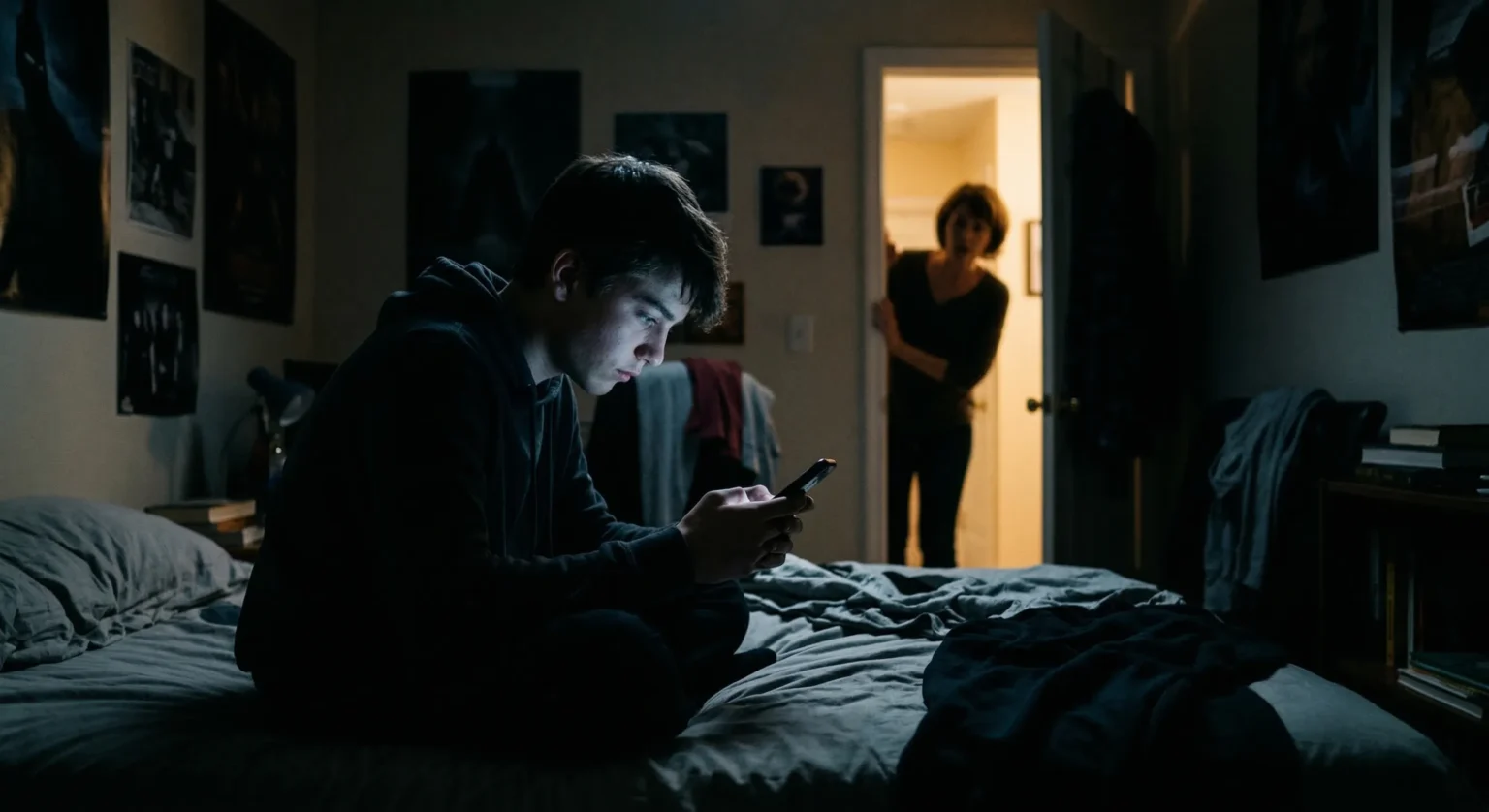
As parents, we are conditioned to believe that teenagers are naturally moody, withdrawn, and difficult. When your bright, engaged child suddenly retreats to their bedroom, stops talking at the dinner table, and loses interest in their favorite sports, the most common advice you will hear from well-meaning friends is:
“It’s just a phase. They’ll grow out of it.”
This advice leads many parents to adopt a strategy of “watchful waiting.” You hope that when the school year ends, or when the drama with their friend group resolves, the dark cloud will lift. You wait for the teenager you know to return.
But what if the cloud doesn’t lift?
At Teen Mental Health, we want parents to understand a harsh clinical reality: Clinical depression is not a developmental phase, and it does not cure itself. It is a progressive neurobiological condition. Treating teen depression like a “bad mood” is akin to treating a broken bone like a sprain—hoping it will heal on its own only guarantees that it will heal incorrectly, causing permanent damage to the surrounding structure.
In this comprehensive guide, we will answer the terrifying question: What actually happens if teen depression goes untreated? We will explore the hidden damage to the developing brain, the derailment of their future trajectory, the slide into substance abuse, and most importantly, how to step in and reverse the damage before it is too late.
If you suspect your child is struggling and you are tired of waiting for things to get better, explore our Teen Treatment Programs to find professional support.
1. The Neurobiological Toll: Depression as a "Neurotoxin"
The most significant consequence of untreated depression is invisible to the naked eye. It happens inside the brain.
The teenage brain is incredibly malleable. It is undergoing a massive period of “pruning” and rewiring, making it highly efficient but also highly vulnerable to environmental and chemical stress.
The Cortisol Flood: When a teen is suffering from chronic, untreated depression or anxiety, their brain is constantly bathed in cortisol (the stress hormone). Over long periods, excess cortisol acts as a neurotoxin.
- Shrinking the Hippocampus: According to research from the National Institute of Mental Health (NIMH), chronic depression actually causes the hippocampus—the area of the brain responsible for learning, memory, and emotional regulation—to shrink in volume.
- Hyper-Active Amygdala: While the memory center shrinks, the amygdala (the fear and threat-detection center) becomes enlarged and hyper-reactive.
The Result: Your teen isn’t just “acting” differently; their brain structure is physically adapting to a state of constant despair. They become biologically wired to expect the worst, making it physically harder for them to learn new things in school or regulate their anger at home.
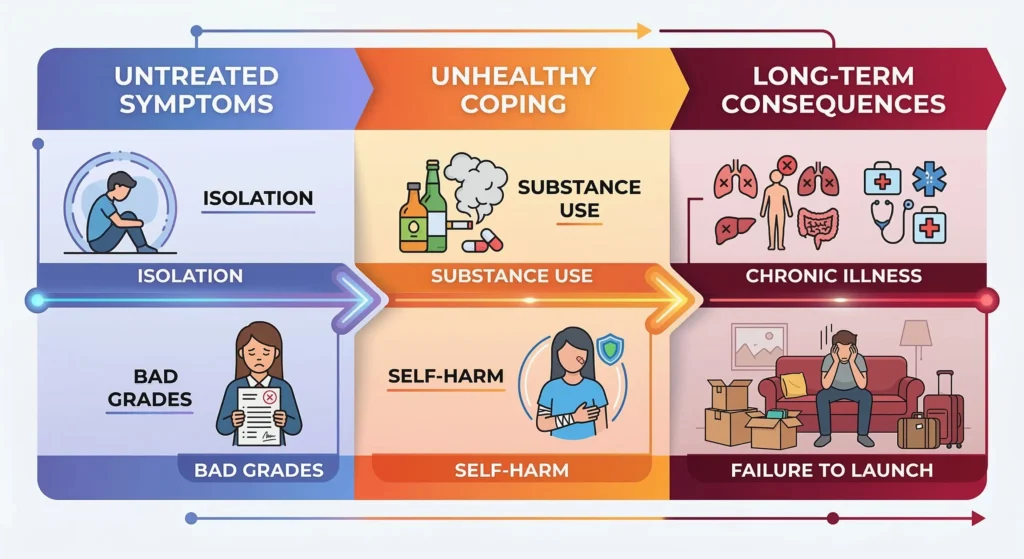
2. "Failure to Launch": Academic and Developmental Derailment
Adolescence is a critical window for acquiring the life skills necessary for adulthood. Teens must learn how to manage time, navigate complex social hierarchies, handle romantic rejection, and advocate for themselves.
When depression takes over, this developmental clock stops ticking. We call this Developmental Arrest.
The Academic Slide: Depression destroys “Executive Function.” Your teen is not being lazy; their brain’s ability to plan, focus, and initiate tasks has gone offline.
- Missing assignments pile up.
- The shame of falling behind leads to “School Refusal” (faking illness or having panic attacks to avoid going to class).
- GPA plummets, severely limiting their college and career options.
Social Isolation: While their peers are learning how to date, interview for jobs, and build deep friendships, the depressed teen is isolated in their room. By the time they reach 18 or 19, they are chronologically an adult, but socially and emotionally, they are years behind. This sets the stage for the “Failure to Launch” syndrome, where the young adult is entirely dependent on their parents and terrified of the outside world.
3. The Gateway to Self-Medication (Substance Abuse)
Nobody likes to be in pain. If a teenager is drowning in psychological agony and does not have access to a therapist or healthy coping mechanisms, they will find their own way to turn the pain off.
This is how the vast majority of teen substance abuse begins. It is not about “partying”; it is about Self-Medication.
- Vaping and Nicotine: Used as a highly accessible stimulant to cut through the “brain fog” and lethargy of depression.
- Marijuana: Frequently abused to silence the harsh “inner critic” of depression or to force the brain to fall asleep when plagued by insomnia.
- Alcohol and Pills: Used to numb out entirely or manage the severe social anxiety that often accompanies depressive episodes.
The Complication: When untreated depression merges with substance abuse, it creates a Co-Occurring Disorder (or Dual Diagnosis). According to the Substance Abuse and Mental Health Services Administration (SAMHSA), treating addiction without addressing the underlying depression almost always results in relapse, because the root source of the pain has been ignored.
4. Somatic Symptoms: When the Body Keeps the Score
Parents are often confused when their depressed teen ends up in the pediatrician’s office multiple times a month with physical complaints that have no clear medical cause.
If the mind is not allowed to heal, the body will absorb the stress. We call these Somatic Symptoms.
- Gastrointestinal Issues: 90% of the body’s serotonin is produced in the gut. Untreated depression routinely causes severe stomach aches, nausea, Irritable Bowel Syndrome (IBS), and changes in appetite.
- Chronic Pain: Unexplained headaches, joint pain, and jaw tension (from chronic clenching).
- Immune Suppression: The constant stress load depresses the immune system, meaning the teen catches every cold, flu, and virus circulating at school.
If your teen is constantly in the nurse’s office, but the doctor says they are “physically fine,” it is time to look at their mental health.
5. The Toll on the Family System
Untreated teen depression does not exist in a vacuum; it is a black hole that pulls the entire family system in.
- Parental Burnout: You find yourself walking on eggshells in your own home. You stop making plans, constantly monitoring your teen’s mood to prevent an explosion. Your marriage may suffer under the weight of disagreement on how to handle the “behavior.”
- The “Glass Child” Syndrome: Siblings of depressed teens often suffer in silence. Because the depressed teen requires 90% of the parents’ emotional energy, the healthy siblings learn to hide their own needs. They become hyper-independent “glass children”—transparent and unseen—leading to their own resentment and anxiety issues later in life.
6. The Ultimate Danger: Self-Harm and Suicide
This is the hardest reality to face, but it must be spoken aloud. The most devastating consequence of untreated depression is death.
Depression operates by narrowing a teenager’s vision. To a healthy brain, a failed math test is a bummer. To a severely depressed brain, a failed math test is absolute proof that they are worthless, unlovable, and a burden to their family. They cannot see a future where things get better.
Non-Suicidal Self-Injury (NSSI): Behaviors like cutting or burning are often a desperate attempt to regulate the nervous system. The physical pain forces the brain to release endorphins, temporarily interrupting the emotional agony. While not always a suicide attempt, self-harm is a massive red flag that the teen’s coping mechanisms have completely failed.
The Risk of Escalation: According to data from the Centers for Disease Control and Prevention (CDC), suicide is the second leading cause of death among individuals aged 10-14 and 15-24. Untreated depression is the primary driver of this statistic.
Never ignore statements like:
- “I wish I could just go to sleep and not wake up.”
- “You guys would be better off without me.”
- “What is the point of any of this?”

7. The "Echo" Into Adulthood
If a teen survives untreated depression, the scars echo far into their adult life. Research has definitively shown that adolescents who experience a major depressive episode that goes untreated are significantly more likely to suffer from chronic, recurrent depression as adults.
The Long-Term Adult Consequences Include:
- Higher rates of unemployment and lower lifetime earning potential (due to the developmental and academic derailment).
- Higher rates of divorce and relationship instability (due to a lack of emotional regulation skills).
- A higher likelihood of developing chronic physical health conditions, including cardiovascular disease.
By intervening now, you are not just saving their teenage years; you are fundamentally altering the trajectory of their entire adult life.
The Turning Point: Why Professional Treatment Works
The outlook sounds grim, but there is incredible hope. Because the teenage brain is so adaptable (neuroplasticity), it responds remarkably well to proper, evidence-based treatment. The damage is not permanent if it is interrupted.
At Teen Mental Health, we don’t just tell teens to “think positive.” We actively rewire their brains and give them the tools to navigate a difficult world.
Cognitive Behavioral Therapy (CBT)
CBT teaches teens to identify the “cognitive distortions” that depression uses to lie to them. They learn to separate their thoughts (“I am worthless”) from the facts (“I made a mistake, but my family loves me”).
Dialectical Behavior Therapy (DBT)
For teens who feel emotions at 110% intensity, DBT is a lifesaver. It teaches Distress Tolerance—how to survive a panic attack or a wave of suicidal ideation without turning to self-harm or drugs.
Psychiatric Stabilization
In cases of moderate to severe depression, the brain’s chemistry is so depleted that talk therapy alone cannot gain traction. Carefully managed, non-addictive psychiatric medication (like SSRIs) can provide the biological “floor” necessary for the teen to actually engage in therapy.
Which Level of Care Does Your Teen Need?
Weekly therapy is a great starting point, but if your teen is already showing signs of school refusal, self-harm, or substance use, 50 minutes a week is like trying to empty the ocean with a spoon.
You need a higher level of care to interrupt the crisis.
- Intensive Outpatient Program (IOP): For teens who are struggling but can safely remain in school. They attend robust group and individual therapy for 3 hours a day, 3 to 4 days a week, typically after school. Learn more about our Intensive Outpatient Program.
- Partial Hospitalization Program (PHP): “Day Treatment.” For teens who are unable to function in their normal school environment. They attend treatment for 6 hours a day, focusing intensively on psychiatric stabilization, group therapy, and academic coordination, while sleeping safely at home.
- Residential Treatment: For teens who require 24/7 medical and clinical supervision due to a high risk of self-harm, severe substance dependency, or a completely toxic home environment.

Conclusion: Do Not Wait for the Crash
The hardest part of being a parent is realizing you cannot fix your child’s pain with just your love. Love is the foundation, but love alone cannot cure a neurobiological disorder.
Waiting for your teen to “grow out of it” is a gamble with their life. Intervening early is not an overreaction; it is the ultimate act of parental strength. It shows your teenager that you see their pain, you validate it, and you will move mountains to get them the help they deserve.
Your vibrant, capable, joyful child is still in there. They are just buried under a heavy blanket of depression. Let us help you lift it off.
If you are ready to take action and change the course of your child’s life, contact our admissions team at Teen Mental Health today for a free, confidential clinical assessment.
Frequently Asked Questions (FAQs)
How do I tell the difference between typical teen angst and clinical depression? Look at the Duration and Intensity. Teen angst comes and goes; a bad mood might last a day or two. Clinical depression is persistent, lasting more than two weeks, and it severely impacts their daily function (dropping grades, quitting sports, extreme isolation).
If I ask my teen about suicide, will it put the idea in their head? No. This is a common and dangerous myth. Clinical research consistently shows that asking directly, “Are you having thoughts of killing yourself?” does not increase the risk. Instead, it provides massive relief to the teen, showing them it is safe to talk about their darkest fears.
Will my teen be mad at me for forcing them into a treatment program? Initially, they might be. The depression will tell them that treatment is a punishment. However, once their brain chemistry stabilizes and they find a community of peers who understand them, the anger usually transforms into gratitude. Prioritize their life over their temporary approval.
Does my teen have to take medication? Not necessarily. Medication is a tool, not a requirement. While it is highly effective for severe depression when combined with therapy, many teens make full recoveries through behavioral therapies (CBT/DBT), lifestyle changes, and structured support alone. Our psychiatric team will work with you to find the best path forward.