
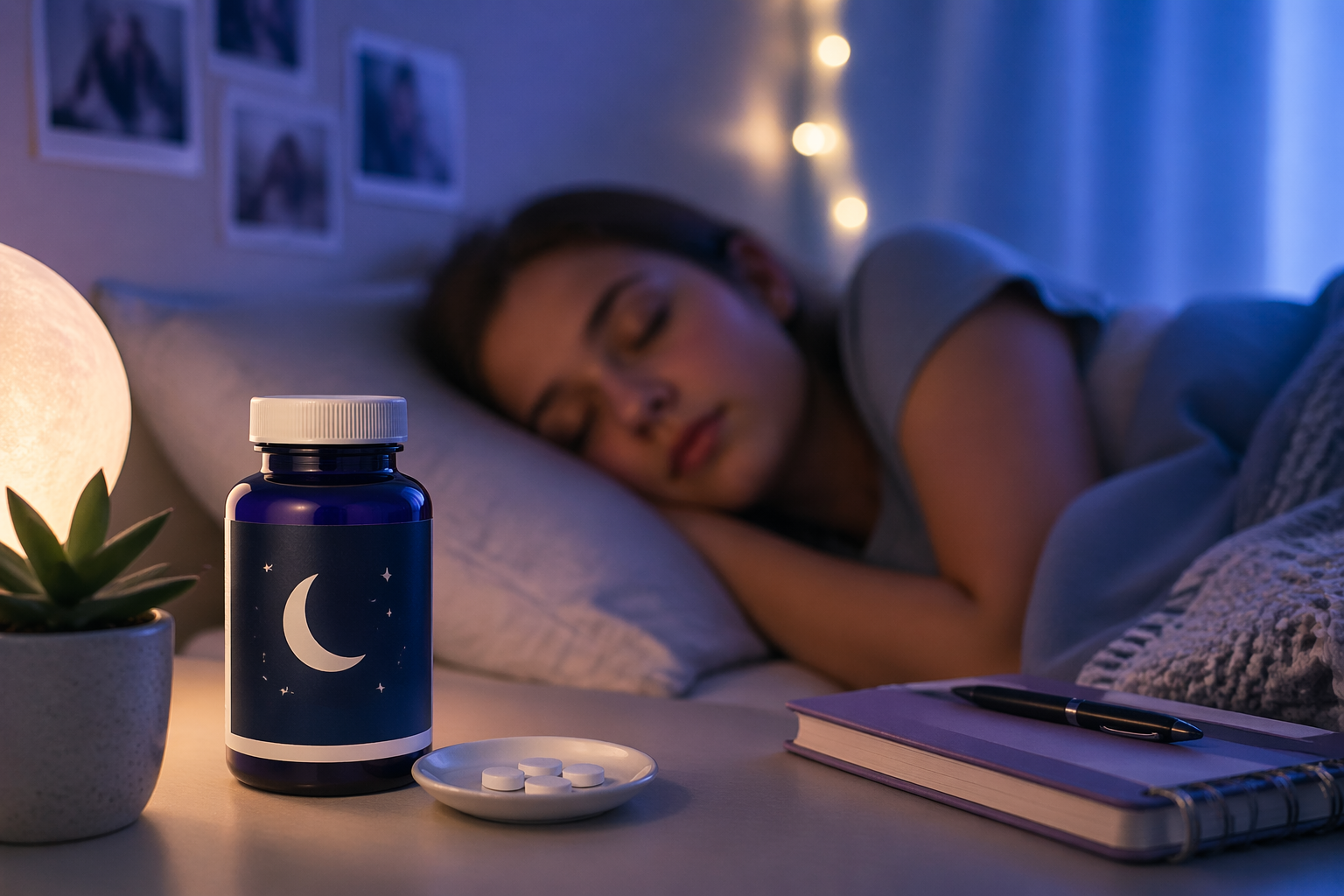

Melatonin for teens is a common sleep aid used to help teenagers who have trouble falling asleep or staying asleep. Melatonin is a natural hormone made by the brain. It helps control the body’s sleep cycle and circadian rhythm. This rhythm tells the body when it is time to sleep and when it is time to wake up.
When teens struggle with sleep problems, parents may look into melatonin supplements. These are sold as a dietary supplement and can help the body release melatonin at the right time. If your teen has insomnia or cannot get a good night’s sleep, learning about safe options is important. You can explore more about teen sleep and mental health at Teen Mental Health Facility.
How Melatonin Works in the Body
The Brain and Sleep Cycle
The brain controls sleep by releasing melatonin at night. When it gets dark, the body’s natural production of melatonin increases. This helps teens feel sleepy and ready for bed.
Light, screens, and stress can lower melatonin levels. This can cause trouble falling asleep and staying asleep. That is why many teenagers struggle with sleep issues.
Circadian Rhythm and Sleep Schedule
The circadian rhythm is like a clock inside the body. It controls the sleep schedule. Teens often have a delayed sleep cycle. This means they feel awake late at night and tired in the morning.
Melatonin supplements may help reset this rhythm. They can help teens fall asleep earlier and improve their bedtime habits.
Why Teens Use Melatonin Supplements
Common Sleep Problems in Teens
Many teens have sleep problems such as:
Trouble falling asleep
Staying awake late at night
Waking up often
Feeling tired during the day
These issues can affect school, mood, and health.
Melatonin as a Sleep Aid
Melatonin is often used as a sleep aid for short term use. It can help:
Improve sleep cycle
Support a consistent bedtime
Reduce insomnia symptoms
Help with jet lag
Many parents consider giving melatonin to children and teens when other sleep habits do not work.
Is Melatonin Safe for Teens?
What Experts Say
Most people believe melatonin is safe when used correctly. However, it is still a hormone, not just a simple supplement.
The Food and Drug Administration does not regulate melatonin products the same way as medication. This means melatonin content can vary between products.
Talk to a Doctor First
Before taking melatonin, it is important to talk to a doctor or a child’s pediatrician. A sleep specialist can also help.
This is very important for teens with:
Depression
Autism or other neurodevelopmental disorders
Other health conditions
Use of other medicines
Recommended Dosage for Teens
Start with a Low Dose
Experts suggest starting with a low dose. A small amount can often be enough to help teens fall asleep.
Typical dosage may range from 0.5 mg to 3 mg. Some cases may need a slightly higher dose, but only under a doctor’s care.
Timing Matters
Taking melatonin at the right time is key. It should be taken about 1 to 2 hours before bedtime. This helps the body prepare for sleep.
Taking too much or at the wrong time can affect the sleep cycle.
Short Term vs Longer Term Use
Short Term Use
Melatonin is best for short term use. It can help during times of change like:
Travel or jet lag
New school schedule
Temporary stress
Longer Term Use Risks
Longer term use is still being studied. There are concerns about how extra melatonin may affect a child’s growth and hormone levels.
Parents should avoid long term use without medical advice.
Most Common Side Effects
Mild Side Effects
Most teens do not have serious problems, but some may notice:
Headaches
Drowsiness during the day
Dizziness
Nausea
These are the most common side effects.
Serious Concerns
In rare cases, melatonin ingestion can lead to serious issues. Poison control centers have reported an increase in calls about melatonin use.
There have even been reports involving two children and severe outcomes, including cases where children died after taking too much. While rare, this shows why safe use is important.
Risks of Taking Too Much Melatonin
Overuse and Extra Melatonin
Taking too much melatonin can disrupt the body’s natural production. It can confuse the brain and make sleep worse over time.
Too much can also cause:
Extreme drowsiness
Confusion
Trouble waking up
Keep Supplements Safe
Always keep melatonin products out of reach of kids. Capsules may look like candy to younger children.
Melatonin and Other Medicines
Interactions to Watch
Melatonin can affect how other medicines work. It may interact with:
Antidepressants
Blood pressure medication
Sleep medication
Always tell your doctor about all supplements your teen is taking.
Natural Ways to Boost Melatonin
Healthy Sleep Habits
Before giving melatonin, try natural ways to improve sleep:
Set a consistent bedtime
Turn off screens before bed
Avoid caffeine at night
Create a calm sleep space
These steps help the body release melatonin naturally.
Food and Lifestyle
Some foods may support melatonin levels, such as:
Bananas
Milk
Nuts
Regular exercise and sunlight during the day also help regulate the circadian rhythm.
When to See a Sleep Specialist
Ongoing Sleep Issues
If your teen still has trouble after trying melatonin and healthy habits, it may be time to see a sleep specialist.
They can check for sleep disorders like:
Insomnia
Sleep apnea
Delayed sleep phase
Mental Health Connection
Sleep and mental health are closely linked. Teens with depression or anxiety often have sleep issues. Proper treatment can improve both sleep and overall health.
Melatonin Use in Children and Teens
Age Considerations
Melatonin is sometimes used for children younger than teens, but extra care is needed. Younger children may be more sensitive to dosage.
Special Conditions
Melatonin may help children and teens with autism or neurodevelopmental disorders. These groups often have more sleep problems.
Still, a doctor should guide treatment.
Tips for Parents
Safe Melatonin Use
Parents should follow these tips:
Use the lowest dose possible
Stick to short term use
Follow a doctor’s advice
Monitor side effects
Store supplements safely
Build Healthy Sleep Routines
Helping teens build good habits is the best long term solution. Melatonin should support sleep, not replace healthy routines.
Final Thoughts on Melatonin for Teens
Melatonin for teens can be helpful when used the right way. It can support better sleep and help teens fall asleep faster. However, it is not a cure for all sleep problems.
Understanding dosage, timing, and risks is important. Always talk to a doctor before starting melatonin supplements. With the right approach, teens can improve their sleep and feel better every day.
FAQs
Is melatonin safe for teens?
Melatonin is generally safe for teens when used in low doses and for short term use. Always talk to a doctor before starting.
How much melatonin should a teen take?
Most teens should start with a low dose, such as 0.5 mg to 3 mg. A doctor can recommend the right dosage.
Can melatonin cause side effects?
Yes, some teens may have headaches, dizziness, or drowsiness. These are usually mild.
Can teens take melatonin every night?
It is best for short term use. Long term use should only happen under medical guidance.
What are natural ways to improve sleep?
Teens can improve sleep by having a consistent bedtime, avoiding caffeine, limiting screens, and creating a calm sleep routine.